
Groundwater PFAS Assessment for the City of Guelph
- Client Name
- City of Guelph
- Location
- Guelph, Ontario, Canada
This project was recognized as a Finalist for Water Canada's Drinking Water Award in 2026.
With anticipated PFAS regulations placing greater scrutiny on drinking water sources across Canada, municipalities are increasingly seeking to understand and manage potential risks before regulatory requirements come into effect. For the City of Guelph, which relies almost entirely on groundwater for its drinking water supply, this meant taking a proactive approach to assess PFAS vulnerability across its source areas. By combining a risk-based screening methodology with targeted groundwater sampling, the City and SLR developed a science-based framework to identify potential concerns, guide future monitoring efforts, and support informed infrastructure planning for long-term drinking water protection.
Challenge
Canadian municipalities are anticipating new PFAS regulations in drinking water. In 2024, Health Canada significantly decreased the previous drinking water guidelines for PFAS and moved to a class-based approach, establishing a Drinking Water Objective (DWO) of 30 nanograms per litre (ng/L) for the summed detected concentrations of 25 specific PFAS.
For the City of Guelph, reliant almost exclusively on groundwater, this presented a concern. Recognizing both the significant reduction in PFAS guidelines and the widespread presence of these parameters, the City recognized a need for proactive assessment and planning to avoid the risk of substantial, unplanned capital expenditures – such as building new treatment facilities – if its groundwater sources proved vulnerable to PFAS impacts.
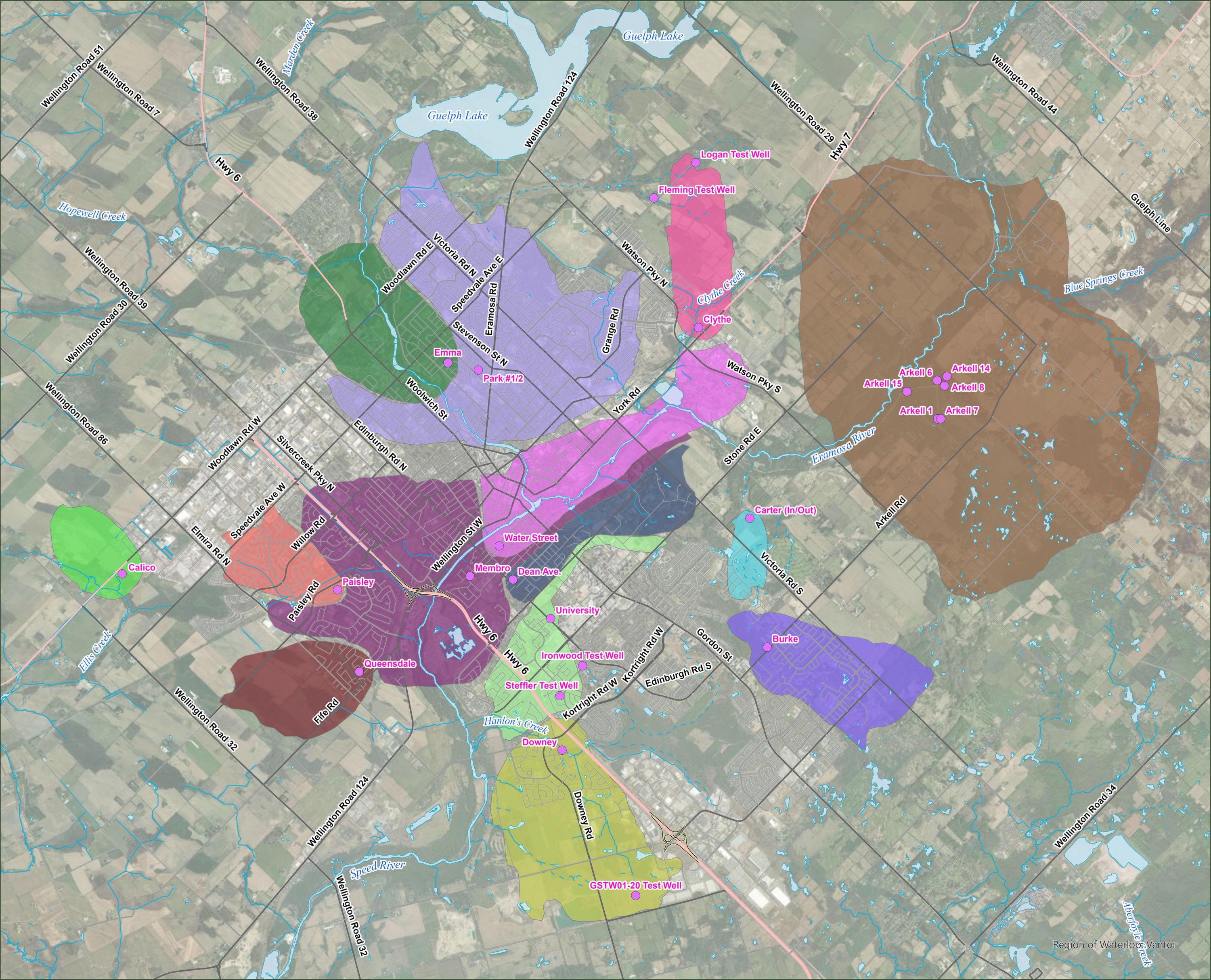
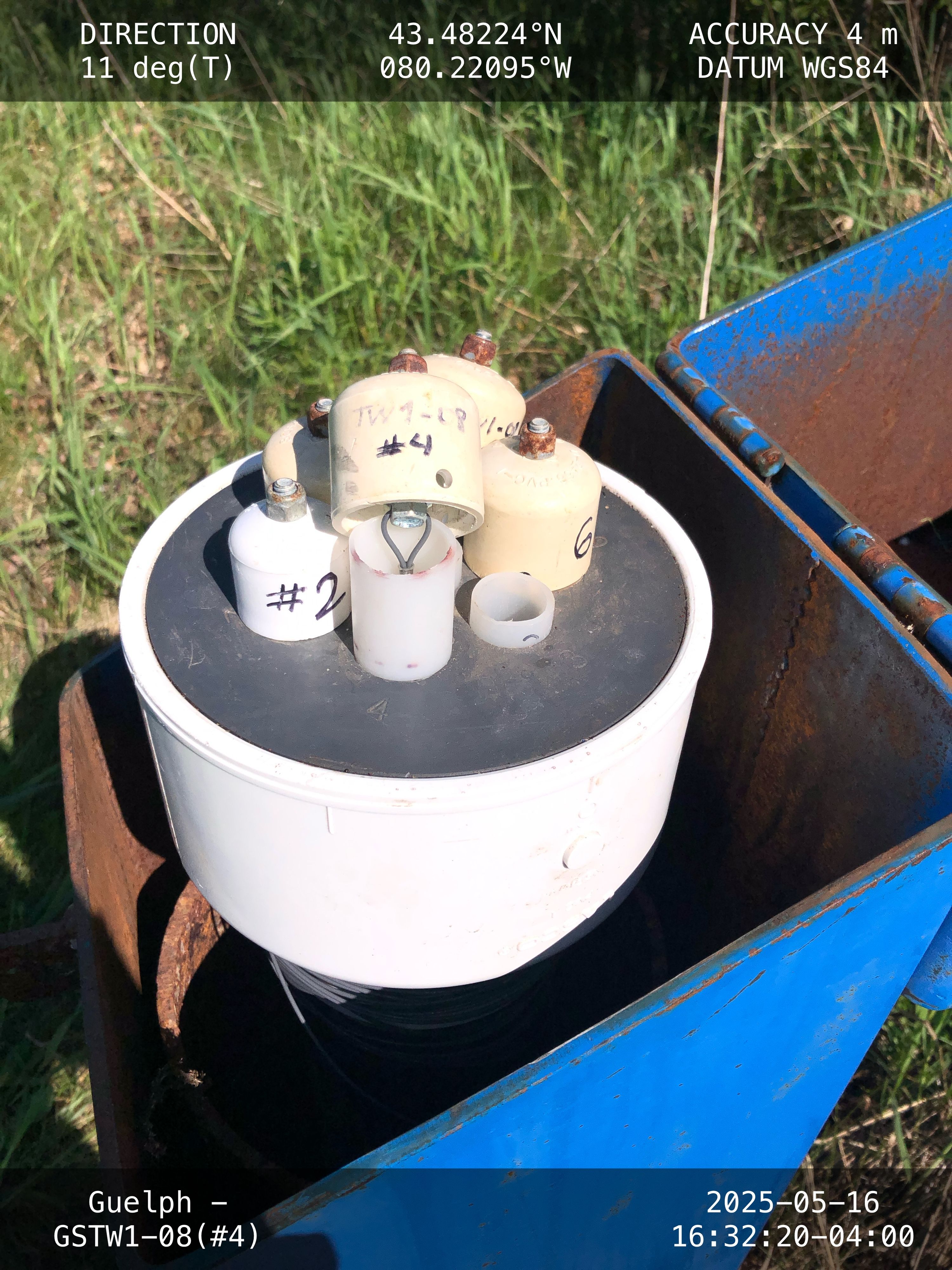
City of Guelph's wellhead protection areas map and nested well
Solution
The City’s approach included the development of a risk screening methodology to evaluate the potential for PFAS impacts to groundwater, as well as the development and implementation of a targeted groundwater sampling program. First, the City identified potential PFAS sources such as landfills, wastewater treatment plants, and firefighting foam release sites and applied risk and evaluation criteria to rank potable groundwater source areas by vulnerability and assessment feasibility. Second, the City engaged SLR to develop and implement a targeted groundwater sampling and analysis plan (SAP), based on the outcomes of the risk ranking.
SLR’s team reviewed the City’s extensive monitoring well network, narrowing hundreds of wells down to 31 strategic locations based on depth, construction, and proximity to vulnerable areas. With no PFAS standard in Ontario, two benchmarks were applied to interpret the results —30 ng/L (Health Canada) and 70 ng/L (Ontario interim criteria). A modified EPA Method 1633 that enabled low limit testing for up to 47 PFAS compounds was applied. SLR also created a custom sampling protocol to facilitate representative, contamination-free samples. The protocol included detailed guidance for field staff, procedures for deep historic wells, and rigorous QA/QC measures.
Impact
The sampling program was completed in August 2025 and provided valuable insights into PFAS concentrations across the City’s groundwater source areas. Most wells tested below the applied PFAS limits, while a few areas showed borderline or inconsistent results that will require ongoing monitoring. Two zones had minor exceedances, and five areas could not be assessed due to a lack of suitable wells. This proactive approach has positioned the City to effectively manage and monitor PFAS risks and make informed decisions about future drinking water infrastructure.
For more details about this project, read our article published in the Environmental Science & Engineering Magazine, December 2025 Issue.
Read the article