
Keeping snow out: Designing HVAC to minimize snow infiltration
- Post Date
- 04 September 2026
- Read Time
- 3 minutes
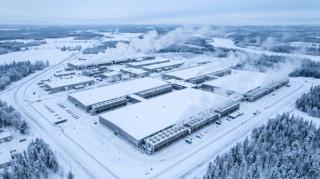
I hate to say it, but winter is coming. Those of us in northern climates acknowledge that winter can last for upwards of six months and that snow affects accessibility in the built environment. Although, upon reflection, acceptance may be a better approach than acknowledgment. And in acceptance of the inevitable, what can we do as owners, designers, and operators to minimize snow volumes on, around, and—potentially (oh no!)—within our buildings?
How does snow get into a building?
As I have previously discussed, snow accumulates on and around buildings. Today’s topic is snow infiltration into buildings. Not through the building envelope (that’s a whole other issue), but rather through the HVAC system, specifically the air intakes.
There are two ways that snow can enter the air intakes of a building. One, being blown directly into the ducts. Two, being pulled into the ducts by the mechanical system. The result is the same no matter the method: the accumulation of meltwater within the HVAC system.
Minimizing wind-driven snow infiltration
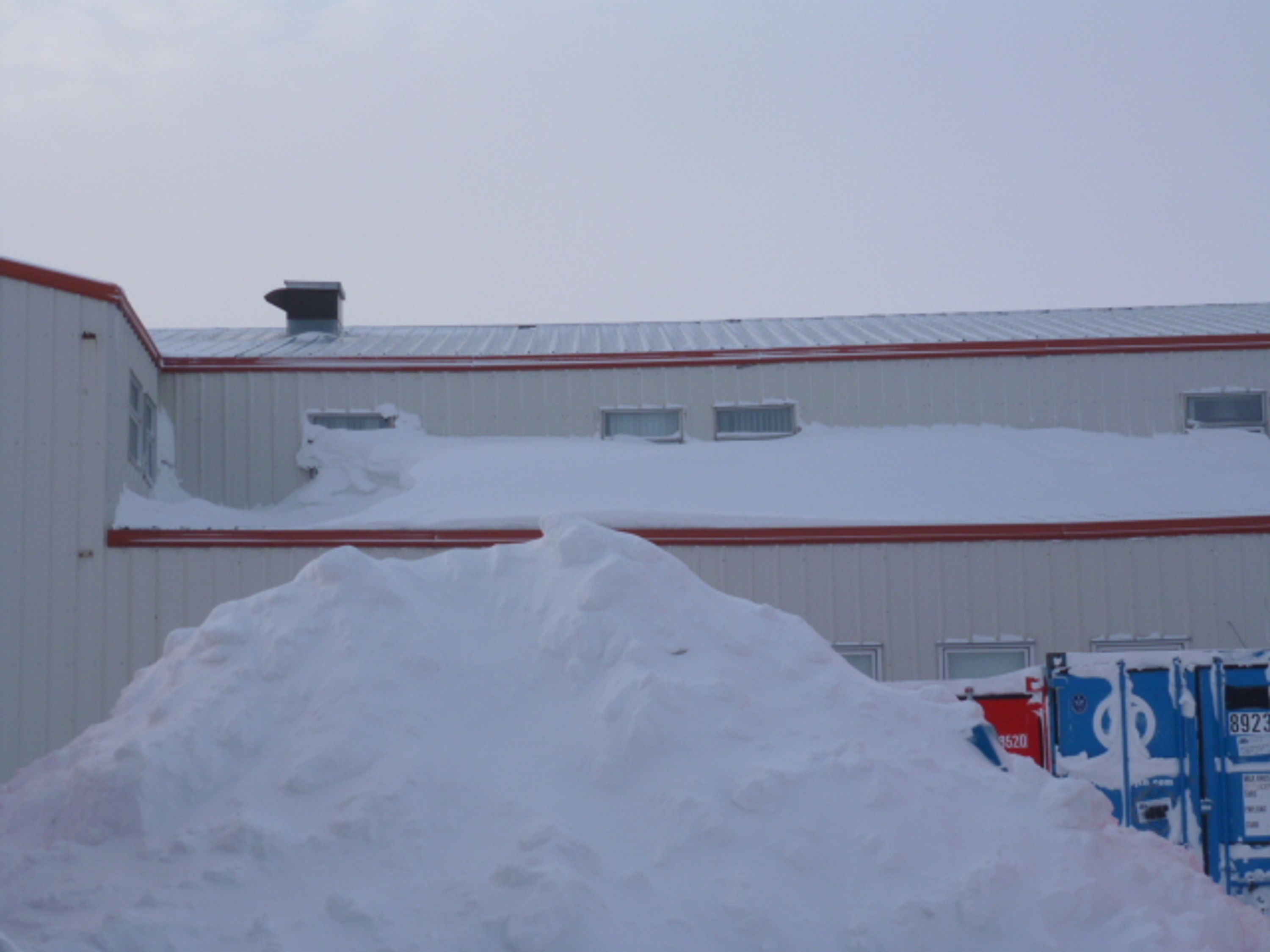
Snow can be blown into air intakes due to a variety of reasons. For instance, the intakes could be located low on the building’s facade, and hence, ground-blown snow will reach the intake. This is most common with intakes located less than 2 m above grade. Note, this method for infiltration also occurs when air intakes are located in roof steps.
Alternatively, the intakes are located high on the building’s face, but the prevailing winds are so predominant that they are incessant, and snowflakes are blown into the intakes. This can occur even with louver and pest screens in place.
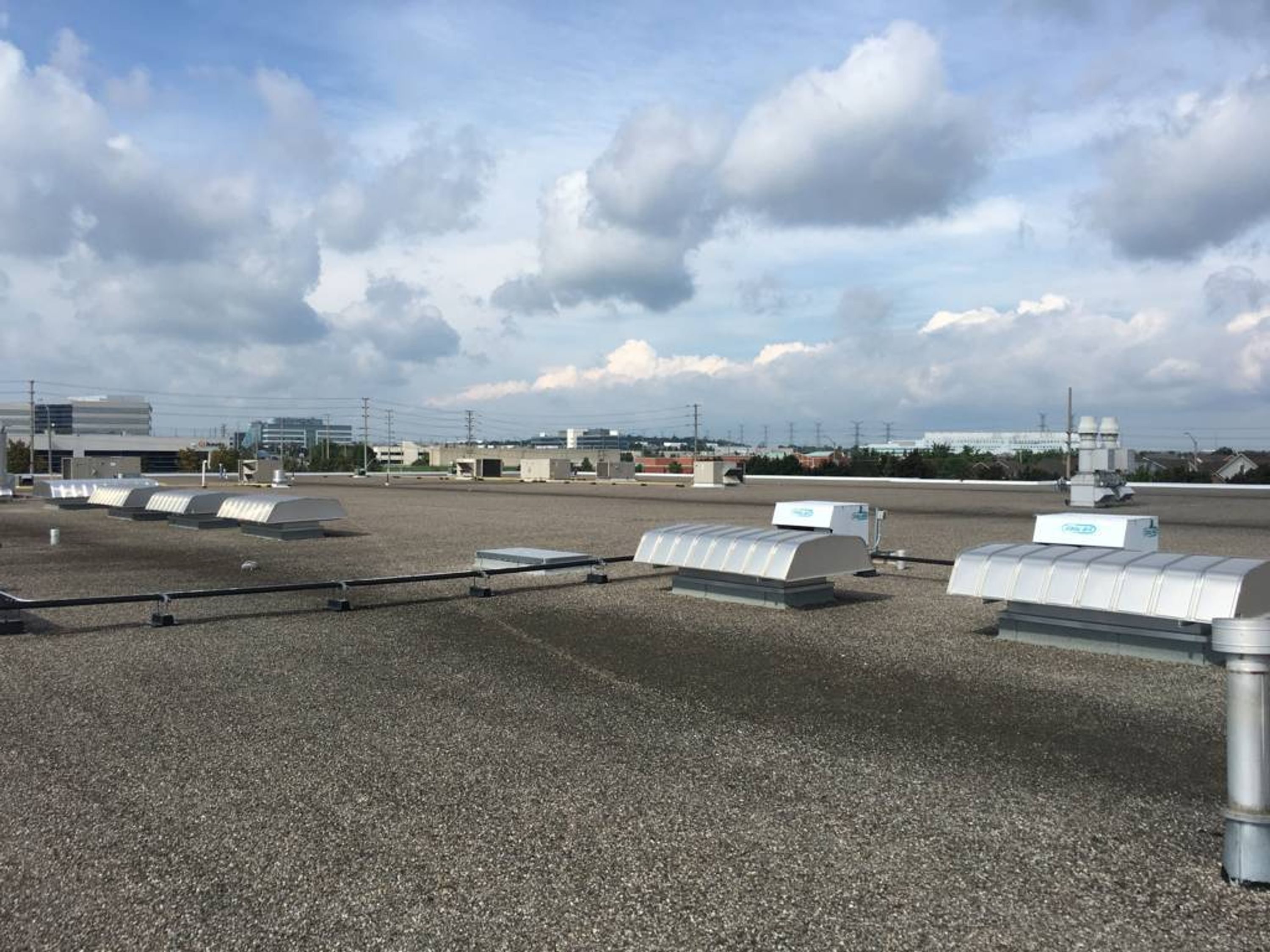
Thirdly, the intakes are located on the roof but are not tall enough to be above the typical snow accumulation over the course of a winter.
How can one remedy this situation?
- Keep the intakes high on the facade to minimize ground-blown snow.
- Ensure the air intakes are taller than the average annual ground snow accumulation for rooftops.
- Locate the air intakes on facades not directly exposed to the prevailing winds, which can be difficult to achieve depending on design requirements and site constraints.
- Do not locate air intakes in roof steps.
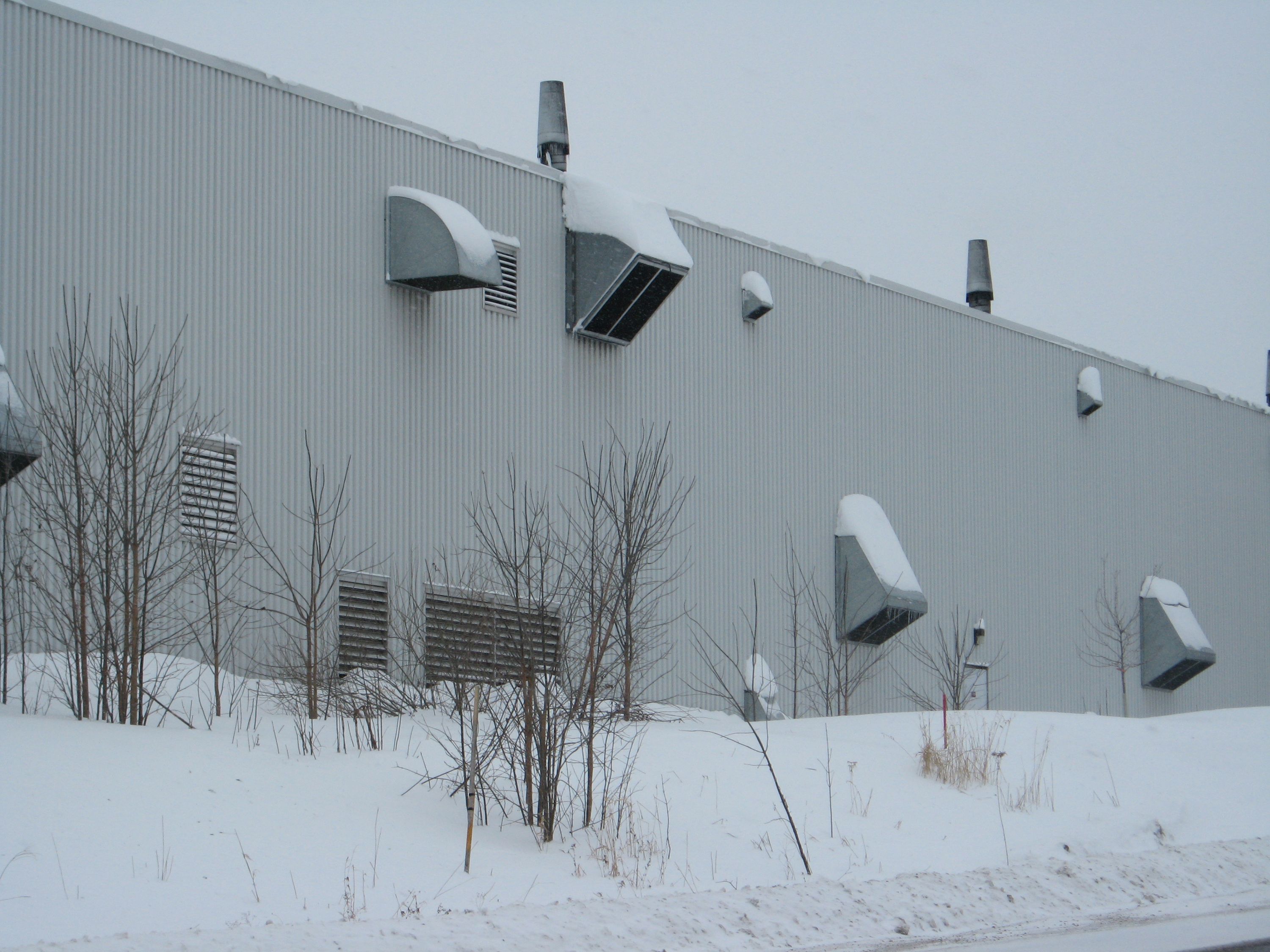
5. Install external hoods over the air intakes. These features force the snowflakes to work against gravity to enter the mechanical system, which limits infiltration significantly.
And if none of those options are feasible and the climate warrants it, the design should include an interior plenum to manage the resulting meltwater, as snow infiltration will be inevitable.
Minimizing mechanical design influences
Alternatively, snow can be drawn into the air intakes due to high CFM values or significant pressure differences between the interior space and the outdoors. These issues are more likely to occur with commercial and/or industrial buildings with large roofs, such as data centres, or those with extensive fresh air requirements. First, the face velocity of the air intake should be below 500 fpm to minimize the potential for snow ingestion. Note, interior plenums can reduce the overall face velocity by enlarging the surface area of the intakes.
Remember, snow can be a hazard. But if it is planned during the design process, operational problems can be minimized.
Recent posts
-
-

-

Data centre backup power may be temporary, but its air quality impacts aren’t
by Ben Turner
View post