Safeguarding infrastructure through ecological problem solving
- Client Name
- Confidential
- Location
- East Anglia, UK
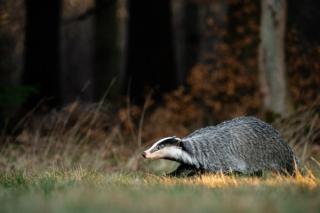
In 2024, SLR was engaged to provide Ecological Clerk of Works (ECoW) support on a major highways scheme in East Anglia. Midway through the project, a critical issue emerged: a badger sett located within the footprint of essential road infrastructure threatened to halt construction and trigger significant cost implications. SLR was asked to urgently step in, resolve complex licensing issues, and prevent major programme delays.
Challenge
As construction progressed, the client had appointed a second ecological consultancy to share risk and capacity. However, the relationship between that team and the contractor deteriorated, especially around the handling of multiple badger mitigation licences. One artificial sett built for displacement was positioned in such a way that it was extremely unlikely the badgers would ever find or use it, creating a high-risk compliance issue.
By late 2024, the project faced a serious deadline. Badger works can legally occur only between 1 July and 30 November each year. If the issue was not resolved before the season closed, works to a key structure would be delayed by a full year, resulting in significant additional public expenditure.
The client urgently needed a specialist to take over the badger licensing, assess the situation, and deliver a workable, legally compliant solution before the end-of-season cut-off.
Solution
SLR was formally asked to assume responsibility as the Named Ecologist on the badger licences despite the licences having been prepared externally. This required:
Rapid forensic review
SLR undertook a full audit of existing licence documentation, identifying technical inaccuracies, including incorrect grid references, and gaps that posed legal and delivery risks. One licence required substantial revision to meet the necessary standards.
Rethinking the entire mitigation strategy
SLR determined that the artificial sett location was unsuitable and that the badgers had no realistic route to find it due to surrounding construction activity, traffic, and disturbance. Following a review of the engineering plans, SLR also identified that only part of the existing sett needed to be affected, rather than the entire structure as previously assumed.
Collaborative licensing with Natural England
Given the unusual circumstances, SLR initiated early and proactive engagement with Natural England. Together, they co-developed a bespoke methodology to allow partial excavation of an active badger sett-an exceptionally rare approach requiring:
- On-call veterinary support
- Prepared animal recovery equipment
- Police notification to avoid misinterpretation by members of the public
- Ground-penetrating radar mapping to locate tunnels
- On-site attendance by Natural England
Despite the complexity, the licence was secured late in the year, just in time for lawful delivery.
Protecting the badgers on-site
SLR implemented measures to keep the badgers safe and in situ, reducing the likelihood of them establishing new constraints elsewhere on the scheme. These measures included:
- Creation of a temporary pond
- Supplemental feeding (approximately 250kg of peanuts per cycle)
- Maintenance of safe access routes
These interventions reduced the risk of the badgers creating new setts in problematic locations, something they can do rapidly, sometimes excavating several metres in a single night.
Maintaining the badgers within their established territory also reduced the risk of road mortality and helped avoid potential reputational and programme risks for the project.
Impact
SLR successfully delivered the partial sett closure within the legally permitted season, preventing a year-long delay to the highways scheme and avoiding significant additional public cost. The badgers remained healthy, active, and present within the territory throughout the works, with no observable reduction in numbers.
The wider scheme is now delivering significant long-term ecological benefits, including new woodland, wetland and meadow habitats, as well as mammal corridors - demonstrating that major infrastructure projects can deliver substantial environmental gain when properly managed.
Additionally, the client has since retained SLR to provide all ecological support for the remainder of the project, reflecting confidence in SLR's quality, responsiveness, and technical rigour.
This case demonstrates the value of:
- Creative ecological problem solving
- Agile response under high programme pressure
- Early collaboration with regulators
- High-quality technical standards
- Long-term client trust built through delivery excellence
SLR's ability to step in mid-project, repair failing processes, and implement a novel, legally robust solution showcases the strength of our ecological practice and our commitment to finding pragmatic, defensible outcomes in challenging conditions.
“Russell Goodchild has been working extremely hard supporting us with the badger licence on this infrastructure project, having recently taken over the licence from another consultancy. I wanted to reach out and express my appreciation and gratitude for his excellent work in identifying the correct path forward for our complicated live-dig licence application.”
Confidential client