
SBTi Corporate Net-Zero Standard Version 2.0
by Jovontae Catline , Caroline Dolan, Joe Sarvary, Liz Whinnett
View post

In April 2020, the Canadian federal government announced a $1.7 billion investment program to clean up inactive wells in Alberta, British Columbia, and Saskatchewan. In May 2020, the site rehabilitation program (SRP) launched in Alberta, providing grants to perform well, pipeline, and oil and gas site closure and reclamation work. The government of Alberta’s website states the goals for the program as “[getting] Alberta’s specialized oil and gas labour force back to work, [accelerating] site abandonment and reclamation efforts, and quickly [completing] a high volume of environmentally-significant work.”
The benefits were felt around the province. With the project coming to an end this February, Alberta Energy estimated that approximately $1 billion in grant funding has been allocated to more than 500 Alberta-based companies, creating more than 3,700 jobs. SLR was fortunate enough to be a part of it, successfully securing funding for 20 clients at over 200 locations. In just under three years, we completed a tremendous amount of work in the short timeframe.
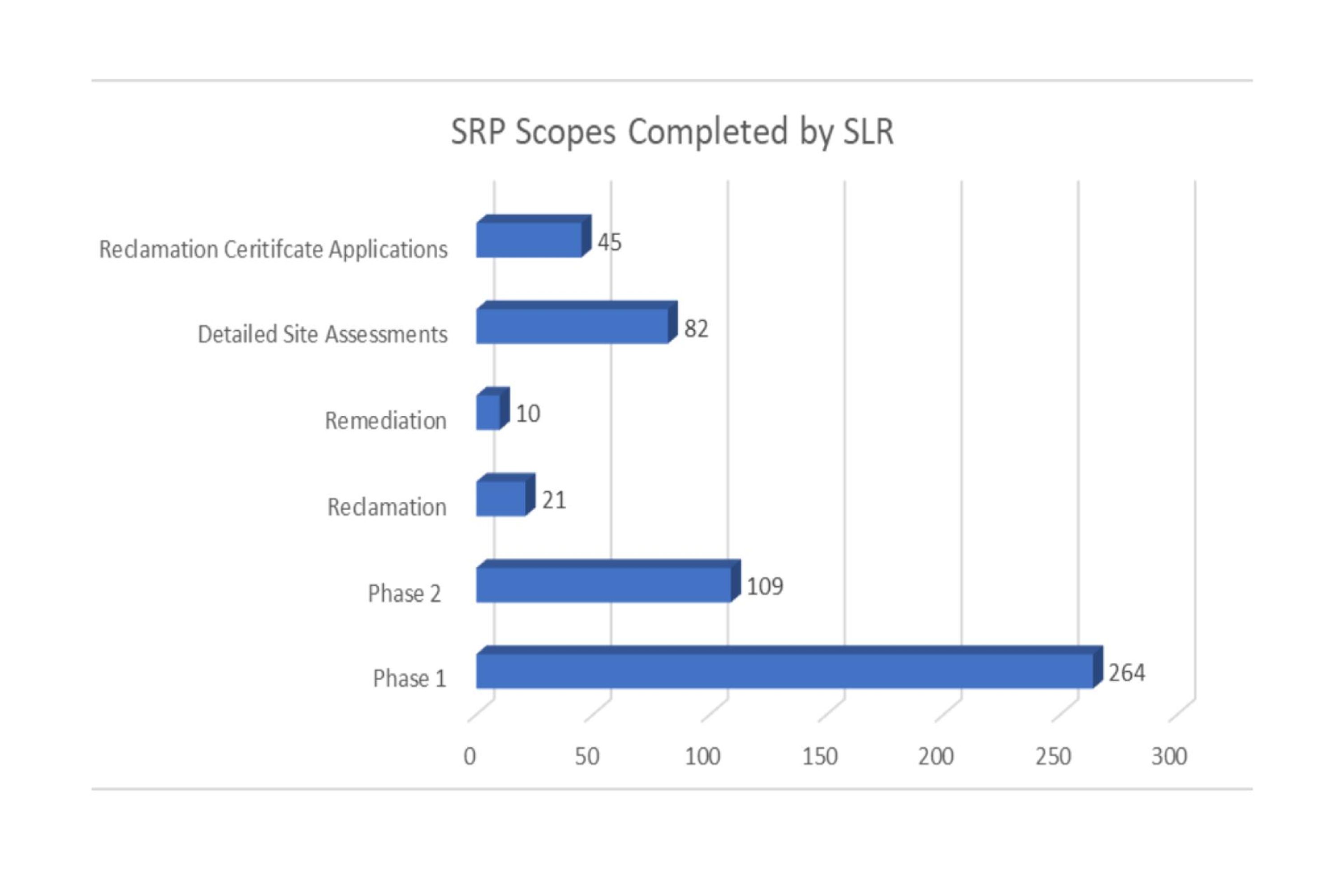
Looking back at how we navigated the SRP process will help us in the future with handling large volumes of work despite human capital deficits, supply chain issues, pandemic restrictions, regulatory changes or whatever else life is going to throw at us while we are trying to get the job done.
I believe the five main factors leading to our success were as follows:
As we put some of the busiest couple of years in our business behind us, I can’t help but think that we are bound to see more large volumes of closure projects ahead. Whatever comes next, we’re up for the challenge.
by Jovontae Catline , Caroline Dolan, Joe Sarvary, Liz Whinnett

by James Balik-Meacher, Sophia Davison, Miguel Oyarbide

by Selina Roman-White, Valeria Alvarado Tejeda, Madison Edson, James Van Horne, Craig Bock, Matthew Mitchell