Data centre backup power may be temporary, but its air quality impacts aren’t
by Ben Turner
View post
As the UK embarks on a bold new chapter of town-building, we find ourselves at a paradoxical crossroads. We have the technology for a net-zero future, yet our delivery is often throttled by a 20th-century ghost: an overstretched, centralised national grid that was never designed for the rapid, localised electrification we now require.
For too long, energy has been treated as a planning afterthought – a utility to be "plugged into" once the houses are designed and the roads are laid. But as grid connection dates slip further into the future, energy is no longer just a technical detail; it is the primary barrier to development.
To move forward, we believe we need to look back. Specifically, to a time when energy was a civic mission rather than a distant commodity.
The title of our upcoming UKREiiF panel, "Back to the Future," is a nod to the origins of our urban infrastructure. Before the era of privatisation, major shifts in UK energy were driven by the public sector. Think of the "Manchester Corporation" or local authorities that provided gas and electricity infrastructure as a fundamental means to improve quality of life.
They didn't just build houses; they built the systems that powered them.
Today, that investment vehicle is missing. Private utilities are often hesitant to own the hyper-local infrastructure required for modern sustainability, and housebuilders – quite rightly – want to focus on what they do best: building homes. This leaves a delivery gap for the very things we need most: heat networks, community solar and integrated waste-to-energy systems.
At SLR, we argue that the new town revolution must be built on localised, shared energy systems. This requires a shift in how we masterplan. Instead of just "chocolate box" houses arranged on a map, we must layer in a resource masterplan from day one.
Imagine a development where:
This isn't radical theory; it is already the reality in places like Sweden and Denmark, where local authorities drive serious, large-scale geothermal and heat-recovery plans that provide cheap, reliable warmth to entire communities.
The perceived barrier to this "local-first" approach is often ownership and risk. Who runs the heat network? Who maintains the battery storage?
The answer lies in joined-up thinking. We see a future where local councils, or even local charities and community-led companies, take ownership of these assets. This removes the long-term management burden from the housebuilder while creating a revenue-generating asset for the community.
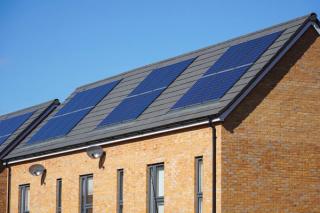
Why are we still seeing new-build solar panels facing north? Why is heat from local data centres or industrial processes being vented into the atmosphere while nearby homes struggle with energy costs?
The "new town revolution" will only succeed if we stop treating energy as something we buy from elsewhere and start treating it as something we manage ourselves. It is time to move from being passive consumers to active producers.
At UKREiiF 2026, SLR brought together a panel of experts to explore how the current energy crisis can become a catalyst for development. They included:
The session unpacked the practicalities of local delivery, the growing role of institutional investment, and how a renewed sense of civic ambition can help power the towns of the future. It highlighted the importance of smarter, localised energy solutions in unlocking growth, de-risking projects and creating more resilient communities.
Watch the highlights below to hear the key insights and perspectives from the panel.