Keeping strategy at the heart of reporting: A webinar series for sustainability, ESG and reporting leaders
Read more
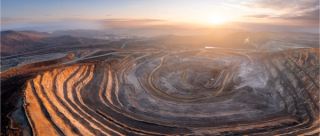
SLR looks forward to exhibiting and presenting at the 10th MINEX Europe Mining & Exploration Forum, taking place 28–29 October at the Knightsbrook Hotel Spa and Golf Resort in Trim, Ireland. The Forum brings together policymakers, miners, investors, technology leaders and community voices to discuss how Europe can move from critical raw materials ambition to delivery.
Visit us at MINEX Europe to connect with our team, hear from our speakers, and discuss how we support mining projects from planning and permitting through to community engagement and social licence.
Stop by our stand and meet SLR’s key industry experts:
Our team looks forward to discussing how we can support your organisation and help deliver successful outcomes on your next project.
Join our experts across four sessions at MINEX Europe, sharing insights and best practice on topics including planning and permitting in Ireland, data-driven mineral discovery, social licence, community trust and reprocessing Europe’s mining legacy.
Session 3: Ireland’s Mining Renaissance
28 October, 14:50 | Barbican Suite 2
Speaker: Hannah McGillycuddy on Planning and Permitting a Mine – An Irish Perspective
Ireland occupies a unique position within Europe’s minerals landscape. As one of the continent’s most established mining jurisdictions, it combines a long history of base metal production with a new generation of critical minerals exploration and development. At the same time, the Department of Climate, Energy and the Environment’s (DCEE) implementation of the Critical Raw Materials Act, the development of national exploration programmes and renewed industry investment are reshaping the country’s approach to resource development. This session examines how Ireland is positioning itself within Europe’s evolving raw materials strategy and asks whether the country can translate geological potential into a new generation of mining projects. The discussion will explore regulatory reforms, permitting frameworks, government policy, investment support mechanisms and the role of mining in national economic development, including the evolution of industry representation through bodies such as the Irish Minerals Industry Group (IMIG). It will also address the legacy of Ireland’s historic mining districts, and how health, safety and environmental obligations at these older sites are being managed as the sector modernises. It will consider whether Ireland’s experience, past and present, offers lessons for other European jurisdictions seeking to strengthen domestic mineral supply chains.
Session 4: Data, Discovery and Research – Building Ireland’s Next Generation of Mineral Projects
28 October, 15:00–16:00 | Barbican Suite 2
Moderator: Hannah McGillycuddy
Modern mineral discovery depends increasingly on the quality of geological data, scientific research and exploration technologies. Ireland has emerged as a leading centre for geoscience innovation through initiatives such as Geological Survey Ireland’s National Exploration Programme and the internationally recognised research activities of iCRAG. This session explores how government agencies, researchers and industry are working together to improve geological understanding, reduce exploration risk and accelerate the discovery of new mineral resources. Topics include national geoscience datasets, critical raw materials research, deep targeting methodologies, artificial intelligence, geophysical technologies and the growing role of digital tools in exploration. The session asks whether Ireland’s integrated approach to science, data and industry collaboration can help unlock the country’s next generation of mining opportunities while supporting Europe’s broader raw materials ambitions.
Session 8: Social Licence as Industrial Policy – Why Legitimacy Is the Real Constraint
29 October, 12:30–13:30 | Barbican Suite 2
Moderator: Paul Gordon
A session examining why mining projects still face resistance, and what developers can do differently to earn trust from the earliest stages of engagement.
Speaker: Beth Candy on Mining in a Connected World – Lessons from Global Mining Communities on Trust, Participation and Project Success
Europe does not only face a permitting challenge. It faces a legitimacy challenge. This session tackles the political and social dimension of mining head-on, asking why domestic projects continue to encounter resistance even when policymakers agree that critical raw materials are essential for climate, industry and defence. The discussion explores trust, local participation, consultation quality, land use conflicts, environmental credibility, benefits sharing and the limits of top-down policy. It also examines why some projects become symbolic political flashpoints and what developers can do differently from the earliest stages of engagement. This session stands out from a standard ESG panel by framing social licence as a core industrial variable rather than an optional communications issue. The objective is to show that no permitting deadline or strategic target will materially shift outcomes unless mining regains public legitimacy on the ground.
Session 9: Designing Projects Europe Can Actually Permit
29 October, 14:30 | Barbican Suite 2
Speaker: Paul Gordon on Going Back for Seconds: Reprocessing Europe’s Mining Legacy
In Europe, project design is increasingly tied to political acceptability, environmental credibility and permitting success. This session focuses on the kinds of mine design, engineering choices and operational strategies that may improve the chances of project approval and long-term viability. Topics include underground mining methods, digital technologies, water stewardship, tailings design, progressive rehabilitation, biodiversity considerations, closure planning and “low-impact” approaches to mine development. The central issue is whether better-designed projects can reduce visible conflict, improve the quality of permitting applications and strengthen the overall case for mining in high-standard jurisdictions. At the same time, the session questions the limits of technical solutions: how far can innovation address opposition, and where do deeper issues of trust and legitimacy remain decisive? The discussion links engineering, ESG, feasibility and project readiness, highlighting the idea that in Europe the projects most likely to succeed may be those designed from the outset for a higher threshold of environmental and social performance.