
Materiality in the media sector
- Post Date
- 20 August 2026
- Read Time
- 8 minutes

Over the course of 2025, the Responsible Media Forum (RMF) conducted research to identify the sector’s material sustainability topics using a Double Materiality Assessment (DMA).
Materiality assessments are used by businesses to identify which sustainability topics to prioritise, and the approach has evolved significantly in recent years.
RMF’s 2025 research was inspired by the DMA framework, which defines the two perspectives to evaluate a sustainability topic: the financial risks and opportunities it poses to the business, and the impact of business activities on people and the planet.
The Responsible Media Forum (RMF) was formally established in 2003 and is a partnership between 21 media companies to identify and act on the social and environmental challenges facing the sector. Having started as a UK initiative, participants now come from all over the world, covering the sector in all its diversity.
One key principle of the RMF is the idea that the media has a unique responsibility through the content it produces, which sets it apart from most other sectors.
The RMF is run by SLR, having been formerly run by Carnstone (which helped to establish the RMF in 2003) until its acquisition by SLR in 2023.
Why the materiality challenge is still relevant in a world of changing requirements
The concept of a DMA came to the fore with the introduction of the EU Corporate Sustainability Reporting Directive (CSRD), which requires companies to use a DMA to determine which sustainability topics are material to their business and therefore need to be reported on. However, the accompanying reporting standards and topics (ESRS – the European Sustainability Reporting Standards) are sector-agnostic.
Consequently, the media sector faces a challenge: how to identify and consider material topics that may be unique to the media sector, i.e., sector-specific? The 2025 working group convened around this question, with the intention of building on previous RMF materiality assessments and providing a useful springboard for media companies conducting their own materiality assessments.
Shortly after this project kicked off, the EU announced its Omnibus package (aimed at simplifying CSRD, amongst other things) and now, nearly a year and a half on, the dust is starting to settle.
Despite a changing regulatory landscape, the principles of DMAs – considering both impact and financial risks and opportunities – have continued to be embedded in the discourse and strategic approaches of many large companies, including those no longer within the scope of the CSRD.
The S&P Global Corporate Sustainability Assessment (2025) found that around half (48%) of analysed companies which disclose their materiality assessment process base it on double materiality. [1] Furthermore, one of the principles that Omnibus has introduced is ‘top-down’ DMAs, which allow companies to determine materiality through a carefully considered qualitative review, rather than fully scoring every single impact, risk, or opportunity (IRO).
Collaborative projects and industry research, such as the latest RMF report, inherently support this thinking and approach, ensuring that expert insights from those most familiar with the sector are captured from the outset. These discussions and the report can act as a stimulus for ideas and discussion and a waymarker for companies navigating the uncertain landscape of sustainability regulation and reporting.
Summary of key RMF findings
Since the RMF’s previous materiality report in 2022 [2], both media and sustainability have evolved significantly, whether through legislation, politics or technology, and in the case of sustainability, also how it is understood and implemented in a business context.
Across 2025, one finding remained consistent: content is media’s most material topic and its superpower. The RMF has played a consistent role in establishing this idea, from early reports like the 2013 Mirrors or Movers Report to more recent findings in the Superpower of Media report (2020) and Measuring Content Impacts in the Media Sector (2025). [2,3,4]
From the latest report, the material elements relating to content were the importance of diverse representation through content; the requirement for high-quality, independent content that honours and protects freedom of expression; and the ultimate responsibility media companies have to consider the potential negative impacts of content, such as misinformation and harmful sentiment.
The challenge that remains is how to measure the non-financial impact of content, something which the 2025 report started to explore in greater detail. [5]
Unsurprisingly, the digital transition and AI emerged as priority topics, with trust in the media an increasing concern. Trust is fast becoming both harder to define in a post-truth world, yet increasingly vital to media – the value of media in this turbulent context will be the basis of the next RMF report.
Media companies face the pressing challenge of engaging audiences as they increasingly move away from ‘traditional’ platforms and content, and of protecting their intellectual and creative property.
Whilst AI is considered an opportunity by many and adoption is increasing rapidly, there was an emphasis on the need for strong AI governance. The RMF has been collaborating on a set of AI principles for the media sector, which will be published later this year.
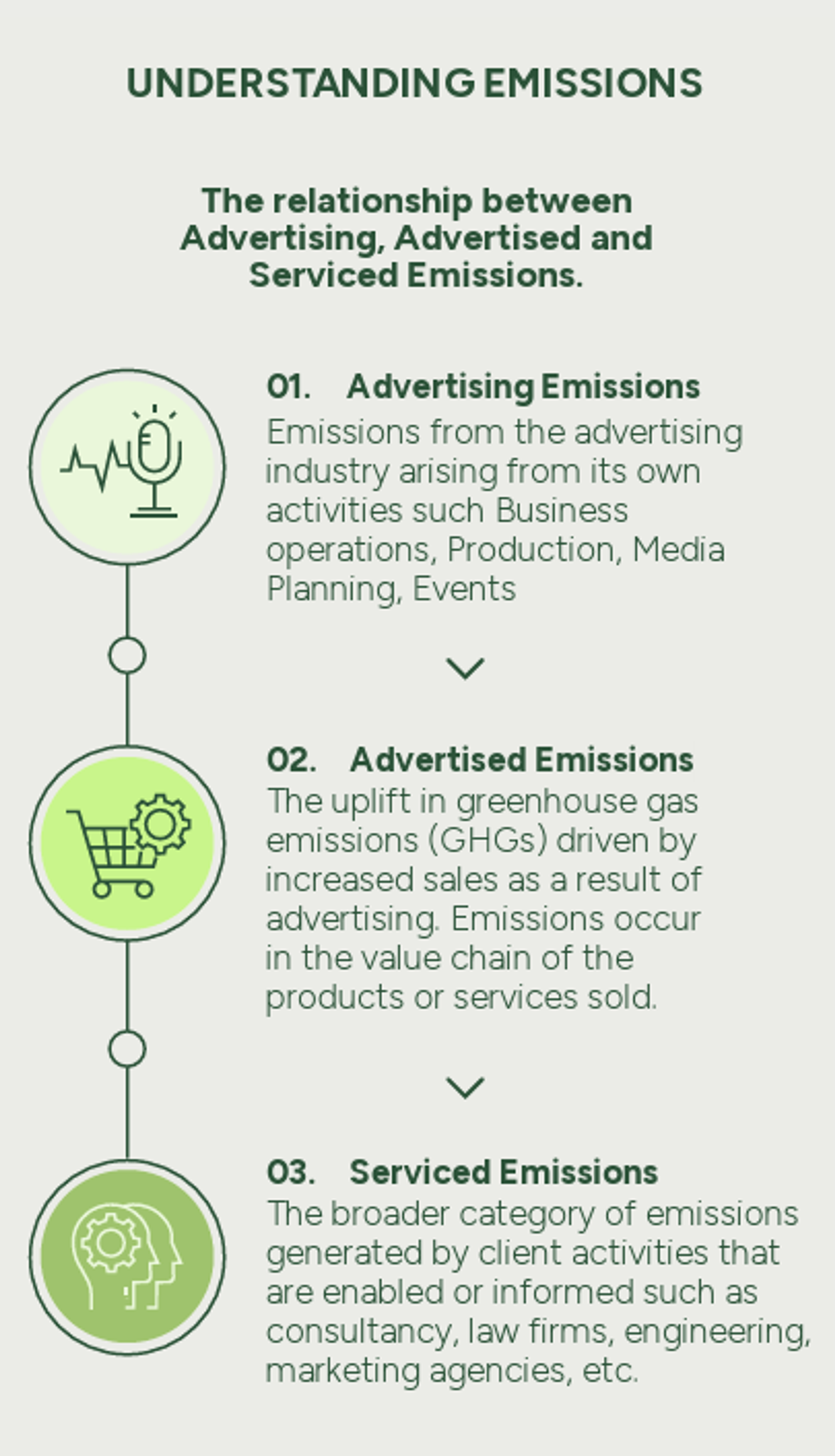
The need for climate action remains important to every stakeholder involved in the report. Environmental topics have been consistently material in RMF reports, but continue to mature. There was a greater focus in 2025 on climate mitigation as the window to limit global warming to safe levels is nearly closed, including the topical notions of Advertising Emissions [6], Advertised Emissions [7] and Serviced Emissions [8], and as the consequences of global inaction become ever greater, the well-established topic of climate adaptation remains a pressing concern.
Four social topics have shifted with the wider landscape: own workforce, supply chain, consumers, and responsible marketing.
Sub-topics which directly impact employees remain a priority for organisations, particularly health, safety and wellbeing (a few highlighted areas included long and unpredictable hours; on-set safety; and the protection of journalists, both location-based risks and online abuse) and diversity, equity and inclusion (DEI), with most media companies remaining committed to creating a safe and inclusive environment for employees to thrive and to support their wellbeing, despite global rollbacks on these topics.
Similarly, there is growing awareness of the potential human and labour rights impacts which are present in the media industry, particularly the risks for workers in production, in telecommunications and publishing supply chains, and for freelance workers.
The sub-topics of Product and Consumer Safety and Accessibility were further developed from the 2022 report. Specifically, the responsibility to protect consumers from harmful content and the consideration of how accessibility intersects with digital poverty and exclusion in a rapidly transitioning, digitised market.
Governance processes are well-established in most organisations as ‘good business hygiene’. Data privacy and cybersecurity remain critical to risk management – particularly for public service media (PSM), which has specific engagement rules following a cyber-attack – and one new topic has emerged: responsible supplier and corporate partner management.
Media is responsible for quality, verified content
The media sector is at the forefront of society’s pressing challenges: declining trust, increasingly polarised politics and partisan action, and rapid digital transformation.
Many organisations are choosing to become increasingly transparent around how they operate and how content is created and verified to demonstrate how vital media can be to learning and education, creativity and the arts, and speaking truth to power.
In the face of this fast-changing landscape, the media’s responsibility to provide quality, verified content is more important than ever; its superpower is a powerful tool to help society navigate its way forward.
The RMF and SLR will continue to monitor the dynamic media landscape and facilitate collaborations which help to connect the dots, build bridges, and bring the sector together. You can download the full 2025 Materiality Report on the RMF website.
Advisory Digest
Enjoyed this article? For more like it, get SLR's quarterly sustainable business briefing straight to your inbox.

References
- S&P Global, The state of double materiality in corporate reporting, February 2025, https://www.spglobal.com/sustainable1/en/insights/special-editorial/double-materiality-is-gaining-traction-in-corporate-reporting
- Daniel Witte, Valentina Okolo and Rosie Towe, Media Materiality 2022: The Material Issues for the Media Sector, 2022, https://share.google/GX7i7BN3k2AU5gq3v
- Simon Hodgson and Christian Toennesen, Media CSRD Forum Mirrors or Movers, 2013, https://share.google/kUJjqDlDT5juPjqcn
- Rosie Towe, Daniel Witte and Christian Toennesen, The Superpower of Media: Mirrors or Movers II, 2020, https://share.google/XxidSuHAjWsKwtj1C
- Imogen Crane, Daniel Witte and Miriam Davies, Measuring Content Impacts in the Media Sector, 2025, https://share.google/MBoQGkEqfXkLLsSOV
- Ad Net Zero, ‘The Ad Net Zero Action Plan’, https://adnetzero.com/the-ad-net-zero-action-plan/
- Purpose Disruptors, ‘What are Advertised Emissions?’, https://www.purposedisruptors.org/what-are-advertised-emissions
- Net Zero and the University of Oxford, ‘Serviced Emissions in Depth’, https://netzeroclimate.org/research/serviced-emissions-in-depth/
Recent posts
-
-

Practical decarbonisation in mining: Can your operations back up your transition plan?
by Romana Thefs
View post -