Petrographic Services

Our team offers specialist petrographic services designed to support a wide range of geological, mining, and quarrying projects. Our skilled petrographers and geoscientists bring in-depth experience and advanced analytical capabilities to help understand the mineralogical and textural characteristics of rock samples essential for accurate resource evaluation and decision-making.
Petrographic services performed by SLR Consulting

Beyond identifying minerals to understanding material behaviour

We provide preparation and analysis of thin sections of geological materials including concrete and quarry products, petrographic investigation of natural rock and quarry materials, including aggregates and manufactured sand, and petrographic reports for certification and recertification. Our team understands the compliance, performance, and durability of construction materials, and supports assessment and technical troubleshooting across the full project lifecycle.

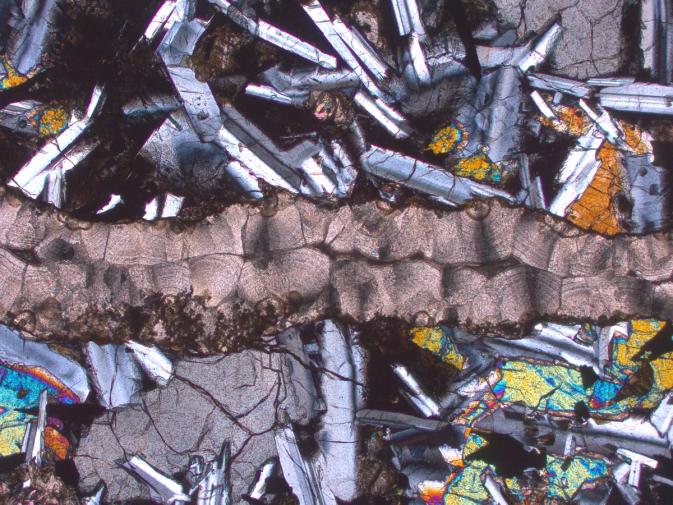
Carbonated basalt 10x ppl

What is Petrography?

Optical mineralogy explains why materials fail, underperform, or behave unexpectedly

Petrographic analysis is the microscopic examination of rocks, core, drill chips, aggregates, sands, manufactured materials, and crusher dust. Using transmitted light analysis with plane- and cross-polarised filters, our petrographers reveal the diagnostic optical properties of minerals to assess mineralogy, texture, fabric, alteration, and possible deleterious components.

This lets us predict how a material will behave in service, including its potential for degradation or failure before that failure ever shows up on site.

  • Why we do it

    Petrography isn't just about naming minerals, it's about explaining material behaviour. We use the optical properties of rock-forming minerals as failure diagnostics, not just identification tools. This tells us what a material is actually made of, not just what it was sold or marketed as, and can explain why two materials with similar test results sometimes perform very differently. Petrography identifies problems before they show up in service, reducing technical, commercial, and reputational risk.

  • We get called when:

    • Physical test results are inconsistent or contradictory
    • A material meets specification on paper but fails in service
    • Unexpected cracking, degradation, or durability issues appear
    • Two sources that look the same perform very differently
    • A failure mechanism needs to be explained, not just measured
    • There is a dispute about material quality or compliance
    • A new material behaves differently to historical supply
    • A mystery rock shows up in the pit
  • Where it's applied

    • Construction materials/concrete - explains durability issues, aggregate incompatibility, unexpected cracking or strength loss.
    • Geotechnical engineering - identifies weak, weathered, or altered lithologies affecting strength, durability, or excavation behaviour.
    • Mining & quarrying - characterises ore gangue, deleterious minerals, structural controls, hardness/abrasivity proxies, and variability within a resource.
    • Workplace Health & Safety - identifies free silica, fibrous minerals, dust-forming constituents, and textural controls on respirable risks.
    • Materials testing laboratories - explains anomalous or conflicting test results when physical data alone doesn't make sense.
    • Research / academic institutions - supports rock characterisation and analysis for researchers.
    • Forensics & disputes - provides defensible, visual evidence explaining failure mechanisms and material non-compliance.
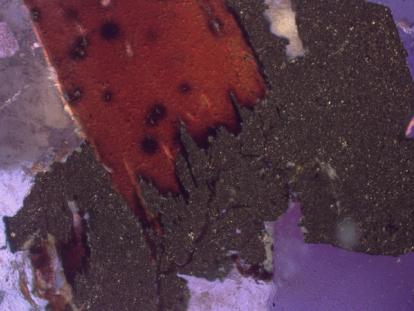
biotite and pyrite in granite 10x XPL RL

Industries We Support

  • Construction Materials & Aggregates
  • Concrete Producers
  • Quarry Operators
  • Mining & Tunnelling
  • Artificial Stone Fabricators/Importers
  • Oil & Gas/Proppant Suppliers
  • Civil & Geotechnical Engineering
  • Occupational Health & Safety/Regulators
  • Research / Universities

Our Testing Capabilities

Our team can provide the following scope of tests:

  • T01: Standard Petrographic Assessment (ASTM C295)

    What we provide: A detailed microscopic examination of your sample to identify rock type, mineral composition, texture, weathering, and deleterious components, reported in accordance with ASTM C295.

    Why it's needed: Petrographic analysis is essential for determining the suitability of aggregates for concrete and construction use, helping avoid costly durability issues like alkali-silica reaction, excessive shrinkage, or poor strength performance.

  • T02: Brief Petrographic Assessment (ASTM C295)

    What we provide: A concise petrographic report detailing the rock type, mineral composition, texture, and physical characteristics of your sample, without interpretive commentary or suitability recommendations.

    Why it's needed: Ideal for routine quality checks or comparative assessments, this analysis provides essential baseline data on aggregate properties to inform your own evaluations or support compliance documentation.

  • T03: Count of Secondary Minerals (Modified, as per AS1141.26)

    What we provide: A point-count analysis quantifying the proportion of soft, weak, and potentially reactive minerals such as clays, chlorite, or carbonates, in accordance with a modified AS1141.26 method.

    Why it's needed: Secondary minerals can compromise concrete durability and signal potential for deleterious reactivity. This test helps identify risky materials early and avoid long-term performance issues.

  • T04: Rock Material Weathering Classification (AS1726)

    What we provide: An expert visual and microscopic assessment of your sample to classify its degree of weathering, based on the AS1726 geotechnical standard.

    Why it's needed: Weathering directly affects strength, durability, and performance of rock-based construction materials. This classification supports reliable design decisions and compliance with geotechnical specifications.

  • T05: Friction Ignition Testing (Incendive Sparking Potential – Ward's Classification)

    What we provide: A microscopic assessment of your sample to determine its potential to produce sparks capable of igniting flammable gases, classified according to Ward's system.

    Why it's needed: Essential for mining, tunnelling, and infrastructure projects in hazardous environments, this test ensures compliance with safety regulations and reduces ignition risk from construction activities.

  • T06: Free Silica and Respirable Crystalline Silica Count (per ASTM C295)

    What we provide: A petrographic point-count and mineralogical assessment to quantify the weight percentage of free silica (primarily quartz) present in your sample, with a focus on respirable crystalline silica content.

    Why it's needed: Understanding free silica levels is critical for compliance with occupational health regulations and for selecting safe materials in fabrication, cutting, or high-dust environments.

  • T07: Crystalline Silica Percentage for Artificial Stone (per ASTM C295)

    What we provide: A detailed point-count petrographic analysis to determine the weight percentage of crystalline silica (typically quartz) in engineered stone products, reported in line with ASTM C295 methodology. We can also organise sampling and assessment of shipments held in quarantine.

    Why it's needed: Accurate silica quantification is essential for health risk assessments, regulatory compliance, and safe handling of artificial stone during cutting, processing, or installation.

  • T08: Shape Analysis (per ISO 13503-2 and API 19C)

    What we provide: Quantitative analysis of particle morphology, including sphericity and roundness based on microscopic imaging and measured to ISO 13503-2 and API 19C standards for engineering or exploration purposes.

    Why it's needed: Particle shape directly affects packing, permeability, and performance in proppants, filter sands, and engineered fills. This analysis ensures materials meet industry-specific functional and durability requirements.

  • T09: Equivalent Quartz Content (Schimazek Method)

    What we provide: A calculated index of aggregate hardness and abrasiveness based on mineral composition, using the Schimazek method to express results as an equivalent quartz percentage.

    Why it's needed: This test helps predict wear on crushing, handling, and mixing equipment, supporting cost-effective material selection for high-throughput or high-durability applications.

  • T10: Quantitative XRD Analysis

    What we provide: Precise mineralogical quantification of bulk samples using X-ray diffraction (XRD) to identify and measure the relative abundance of crystalline phases, including amorphous and clay content where required.

    Why it's needed: Accurate mineral data supports assessment of material suitability, potential deleterious reactions, and compliance with construction standards, enhancing confidence in your project's foundation.

  • T11: X-Ray Fluorescence Analysis

    What we provide: Rapid and accurate chemical elemental analysis of materials using X-ray fluorescence to determine major and trace element concentrations, expressed as weight percentage oxides.

    Why it's needed: Chemical composition data is vital for quality control, identifying contaminants, and assessing material compatibility in concrete and construction applications.

Request a Quote


Discuss with our specialists how we can help support your projects today

Whether you need a standard petrographic assessment, free silica analysis, geochemical testing or a full multi-disciplinary investigation into an unexplained material failure, our team is ready to help.

Request a Quote
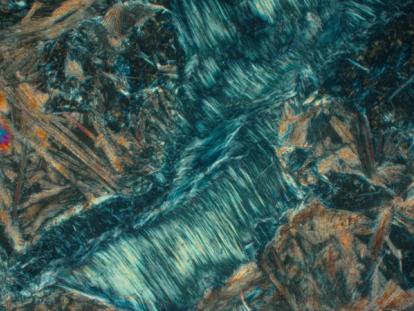
Fibrous actinolite in gabbro 10x xpl

Our Team Includes

  • Dan Franks

    Associate Consultant, Construction Materials & Services – Asia Pacific

  • Mathew Beddard

    Associate Consultant, Construction Materials & Services – Asia Pacific

  • Daniel Crowe

    Principal Consultant, Construction Materials & Services – Asia Pacific

  • Clayton Hill

    Technical Director, Construction Materials & Services - Asia Pacific

Get in Touch

We're here to support you in Making Sustainability Happen. Get in touch for a collaborative discussion about what that could look like for your organisation.

Our locations

Further Reading

Similar pages

Recent articles

  • Headshot of Tim Greenhill with a blurred office background behind him
    News

    07 October 2026

    1 minute read

    Strengthening our Landscape Architecture & Urban Design capability across Asia-Pacific


    Read more
  • Pharmaceutical test tubes on industrial conveyor belt
    News

    06 October 2026

    5 minutes read

    Boehringer Ingelheim partners with SLR on global energy & infrastructure transformation programme


    Read more
  • Businesss Workers using digital tablet computer cargo and tracking delivery for Transportation and global network of smart logistics in blur warehouse background
    Insight

    05 October 2026

    6 minutes read

    Your Scope 3 target has a price tag. Are you planning for it?

    by Joe Sarvary, Catalina Morales


    View post
View all