Understanding the new waste carrier, broker, and dealer reforms in England and Wales
by Roisin Ellis
View post
In July 2026, the UK government published ‘The Environmental Permitting (Waste Controlling or Transporting) and Relevant Functions of Primary Authorities (Amendment) (England) Regulations 2026 – SI 2026/873’ [1]. These regulations form part of the government's wider reforms to waste regulation in England, aimed at strengthening regulatory oversight, improving accountability, and tackling waste crime.
The regulations introduce changes to the regulatory framework governing businesses and individuals involved in the transportation of waste or the arrangement of waste movements. They support the transition from the existing waste carrier, broker and dealer (CBD) registration system towards a more comprehensive environmental permitting regime.
The changes will affect a wide range of businesses involved in waste management activities, including:
The regulations apply to England and Wales. Waste CBDs operating in Scotland and Northern Ireland remain subject to the applicable regulatory requirements in their respective nations. Businesses operating across multiple UK nations will therefore need to consider the different regulatory requirements applicable to their activities.
The reforms are intended to improve the traceability of waste movements, strengthen compliance requirements, and ensure that businesses involved in waste transportation and management are appropriately regulated.
The regulations introduce a major reform of the existing waste CBD licensing system in England and are set to come into force on 22 July 2027. They will replace the current licensing regime with a system of environmental permits and registered exemptions, and there will be transitional arrangements in place to allow existing registered waste CBDs to move to the new system.
Under the current system, businesses involved in transporting, buying, selling, or arranging the management of waste must generally register with the Environment Agency as either an upper-tier or lower-tier waste CBD, depending on their activities. The system is largely registration-based, with limited checks on an operator's suitability or technical competence.
The reforms represent a significant shift towards a more stringent, risk-based environmental permitting regime. Businesses will be required to obtain an environmental permit or register an exemption, where applicable, with enhanced requirements relating to technical competence, operator suitability, and regulatory compliance.
The reform will also update existing terminology. The changes are as follows:
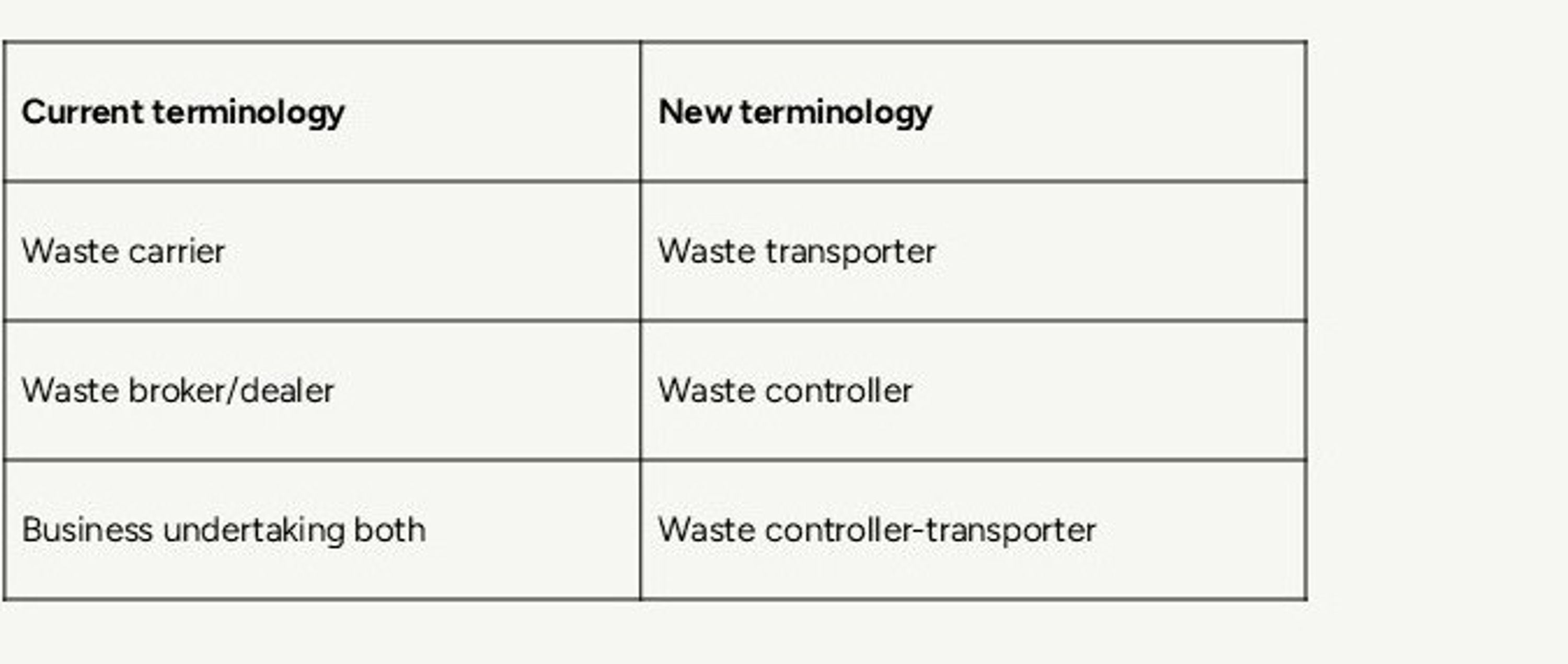
In addition to this, three corresponding types of environmental permit are expected: controller, transporter and combined controller-transporter. Permits will be differentiated according to the activities undertaken and the type, volume, and risk of waste handled.
A waste controller includes someone who:
A business does not need to physically possess the waste to be considered a controller. The Department for Environment, Food & Rural Affairs (Defra) specifically identifies consultants as one example of an organisation that could potentially fall within the controller definition.
A waste transporter is a person or business responsible for physically moving waste between locations. This can include businesses that:
A waste transporter may operate under the instructions of a waste controller, who makes decisions about how and where the waste is managed.
The key distinction is that a waste transporter physically moves the waste, whereas a waste controller makes decisions about its management. Businesses undertaking both activities may require a combined waste controlling and transporting permit.
Existing CBD registrations will need to transition to the new regime, which comes into force on 22 July 2027. Depending on their activities, this transition may require registration to obtain:
Some businesses currently operating under lower-tier registrations may therefore have new registration or permitting requirements.
Another notable change is that waste producers will not automatically require a permit. However, who makes the decisions about the waste becomes important. For example, where a producer gives its waste to a business holding only a transporter permit, the producer may require a controller permit or exemption if it is responsible for decisions about the waste's management.
Operators should review their existing CBD registrations and waste management activities ahead of July 2027 to establish which requirements apply and ensure sufficient time to transition.
SLR’s Environmental Management, Permitting and Compliance team can support clients in preparing for the changes to the waste CBD regime. This includes reviewing existing waste transportation and management activities, determining whether a waste controller, transporter, or combined permit is required, assessing eligibility for registered exemptions, and preparing environmental permit applications to support compliance with the new requirements.
If you would like further information on how these changes may affect your operations, or require support in preparing for the transition, please contact our team.
by Roisin Ellis