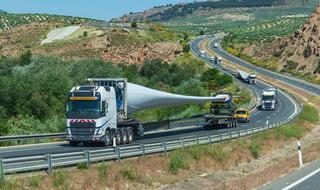
Understanding traffic and transport risks in onshore wind projects
by Charlie Seventekin, Ian Cronshaw
View post

Did you know, it takes hundreds of years to form 1cm of soil? Soil is a limited and valuable resource and is known to store more carbon than the atmosphere, thus it plays a very important part in mitigating climate change. As humans we depend on soil; as a habitat for many living organisms, a growth medium for food, natural fuels, other raw materials and as a natural buffer and filter for the water cycle, carbon cycles and hazards such as flooding.
There is a growing awareness of the benefits of protecting and enhancing the soil environment and the role of good soil management in delivering them. There is yet, no single policy or document in the UK or EU dedicated to soil. However, the UK Governments’ 25-year environment plan[1] begins to place importance on ‘improving soil health’ and reducing harm to soils. For example, one objective states “improving our approach to soil management: by 2030 we want all of England’s soils to be managed sustainably, and we will use natural capital thinking to develop appropriate soil metrics and management approaches.”
The sustainable management of soil is presently not always given the attention it should be during agricultural or construction projects. Although awareness is increasing there is still more that we can do to advise our clients of the value of sustainable soil management.
Soil is a valuable component of the ecosystem and incorrect handling during the soil operations; which includes stripping, handling, storage and reinstatement, can damage the structure of the soils through degradation, over-compaction and contamination. This damage compromises the ability of the soil to perform its functions such as providing adequate air, nutrients and water to plant roots. Poor management or damage to soils and will reduce the amount of carbon it can store and could turn it into a source of emissions[2].
During the planning or design stages of any construction or earthmoving project we should be advising our clients that consideration and assessments of the soil are important and in line with sustainable development practices. Typically, an assessment will take the form of an Agricultural Land Classification report (ALC) or a Soil Resources Survey, undertaken by an experienced soil scientist. These reports detail the characteristics of the soils across a site in its pre-development state.
To manage the soil sustainably during construction, a Soil Management Plan (SMP) should be prepared[3]. A Soil Management Plan sets out the principles and procedures for general good practice mitigation for soil handling, in line with government and regulatory body guidance. Having an SMP in place reduces the risk of losing, damaging or contaminating the nature and quality of valuable soil resources, whether the soil will be retained for future landscaping on-site, or used or sold off-site. As a minimum the aim is to reinstate the soils to their pre-development condition.
With global population projections continuing to increase towards 2050, further increasing the land needed for housing, industry and food production. Sustainable soil management, protection and enhancement will form a key part in the future of our food and water resources on earth, climate change mitigation and carbon sequestration.
References:
[1] UK Government (2018) 25 Year environment plan. Available at: https://www.gov.uk/government/publications/25-year-environment-plan
[2] Soil Association (2018) To Plough or Not to Plough. Available at: https://www.soilassociation.org/media/17472/to-plough-or-not-to-plough-policy-briefing.pdf
[3] DEFRA (2009) Construction Code of Practice for the Sustainable Use of Soils on Construction Sites