Building Hampton's coastal resiliency through innovative drainage improvements
- Client Name
- Town of Hampton, NH
- Location
- Hampton, New Hampshire, USA
SLR developed a drainage improvement design for Hampton, New Hampshire’s Meadow Pond neighborhood to address chronic flooding driven by stormwater runoff, sea level rise, and tidal constraints. The design combines upgraded drainage infrastructure with strategically placed pumping systems, including the repurposing of a former sewer pump station, to improve stormwater management and reduce post-storm impacts.
Challenge
The Town of Hampton, New Hampshire, retained SLR for a second three-year term of on-call engineering services. As part of this work, SLR has completed the final design of drainage improvements for Greene Street, Gentian Road, Meadow Pond Road, and Kings Highway within the Meadow Pond neighborhood.
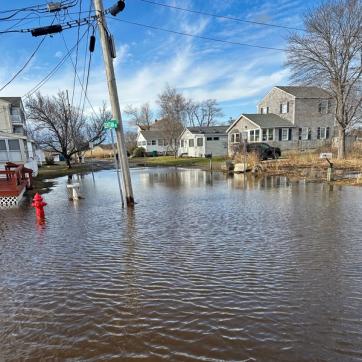
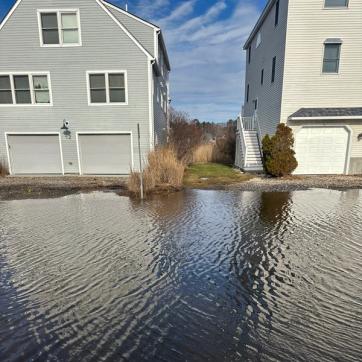
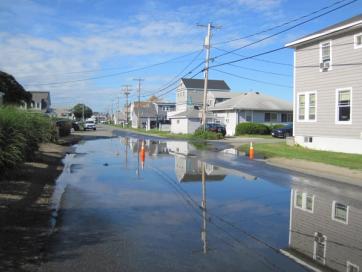
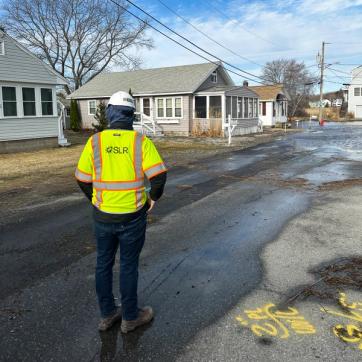
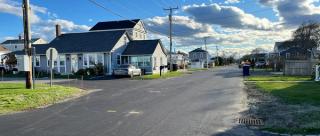
Before images: flooding in the Meadow Pond neighborhood
Impacts of sea level rise and aging infrastructure
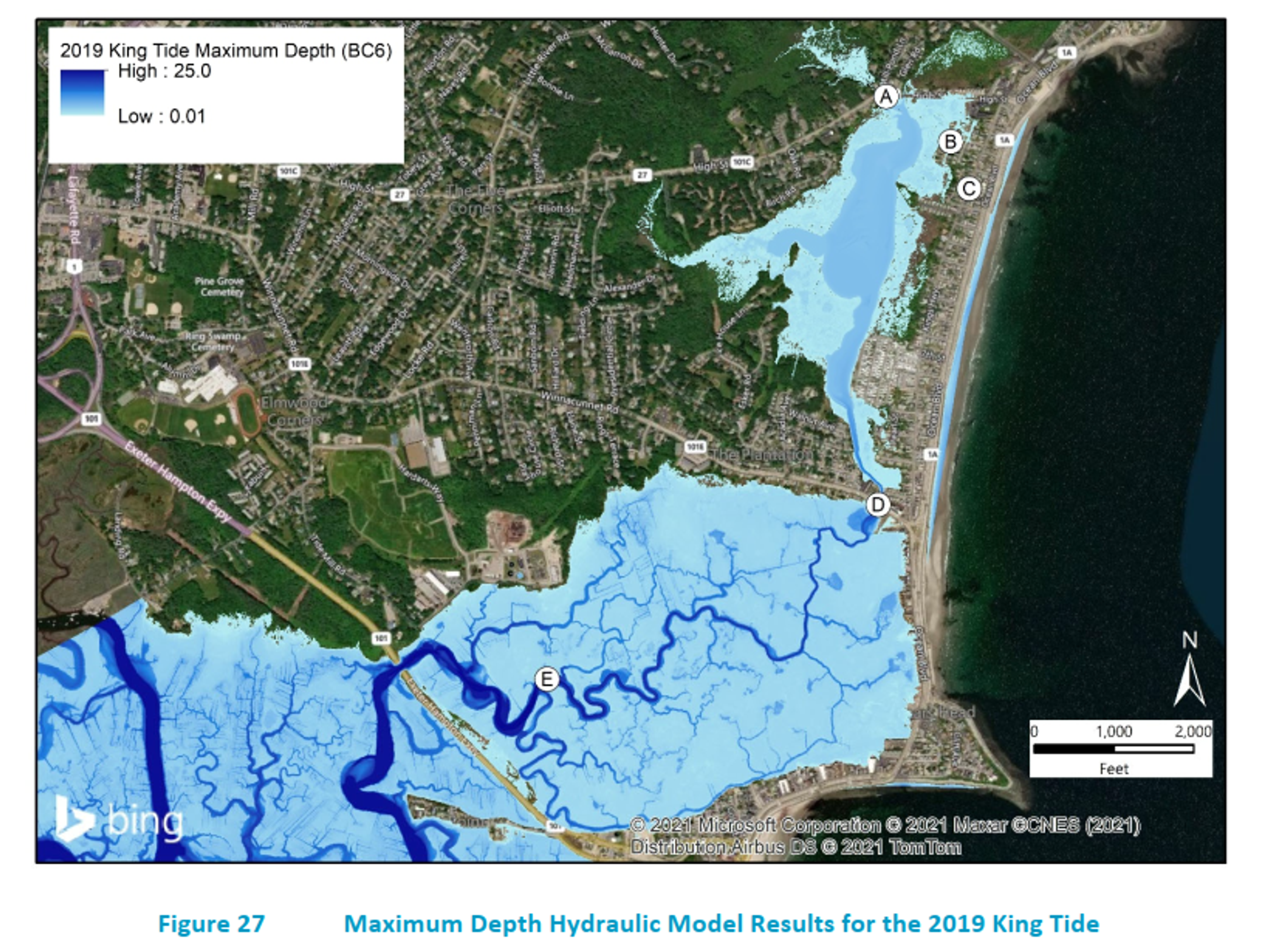
SLR’s 2021 Hampton Flood Mitigation Analysis identified this area as a priority for flood reduction measures, as shown by the Maximum Depth Hydraulic Model Results for the 2019 King Tide figure on the left. This study provided the technical foundation for identifying targeted infrastructure improvements to reduce flood risk and enhance the neighborhood's long-term coastal resilience. The advanced two-dimensional hydrodynamic model included riverine and tidal inflows, as well as sea level rise. The study found that flooding results from a combination of sea level rise, stormwater runoff, low-lying terrain, limited opportunities for tidal discharge, and aging drainage infrastructure.
During high tides, stormwater can become trapped within the drainage system, increasing the likelihood of flooding on roadways and surrounding properties following storm events. Alternatives recommended included improved drainage (completed in 2026), ditch, and marsh restoration (pilot completed in 2025, with expansion design underway), as well as other management techniques for berming, elevating, and managing retreat.
Balancing drainage improvements with existing constraints
The Town required a practical, cost-effective design that would improve drainage at key low points while making use of existing infrastructure wherever feasible. The solution also needed to manage stormwater during periods when high tides restrict natural gravity drainage and address how water remaining in the neighborhood’s drainage network could be removed after storms.
Solution
Conducting hydrologic and hydraulic analysis
As part of the design process, SLR completed watershed, hydrologic, and hydraulic analyses using HydroCAD and StormCAD to evaluate runoff patterns and system performance. The team also reviewed the capacity of the existing force main downstream of the 12th Street pump station and assessed its suitability for future use. In parallel, SLR evaluated a former sewer pump station located at the intersection of 12th Street and Kings Highway to determine whether it could be repurposed to support stormwater management objectives.
SLR evaluated existing drainage conditions throughout the Meadow Pond neighborhood and developed a comprehensive drainage improvement design to better capture, convey, and manage stormwater. The team designed a solution that installed catch basins at key low points, repurposed a former pump station, and added new stormwater pumps to positively discharge drainage to an alternate outlet location. This solution mitigates flooding during freshwater flooding events and provides relief from ponding water that both freezes on the roadways and increases the potential for mosquito breeding. The new drainage infrastructure is intended to remedy the persistent flooding in this neighborhood by directing stormwater flow to a series of new catch basins, watertight piping, and stormwater pumps, which work together to transport the stormwater to an outfall that is not influenced by tides. This redirection of flow away from Meadow Pond and the elimination of the current outfall reduces the tide's effect on the drainage system and the neighborhood.
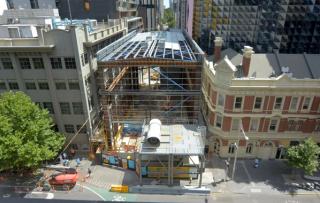
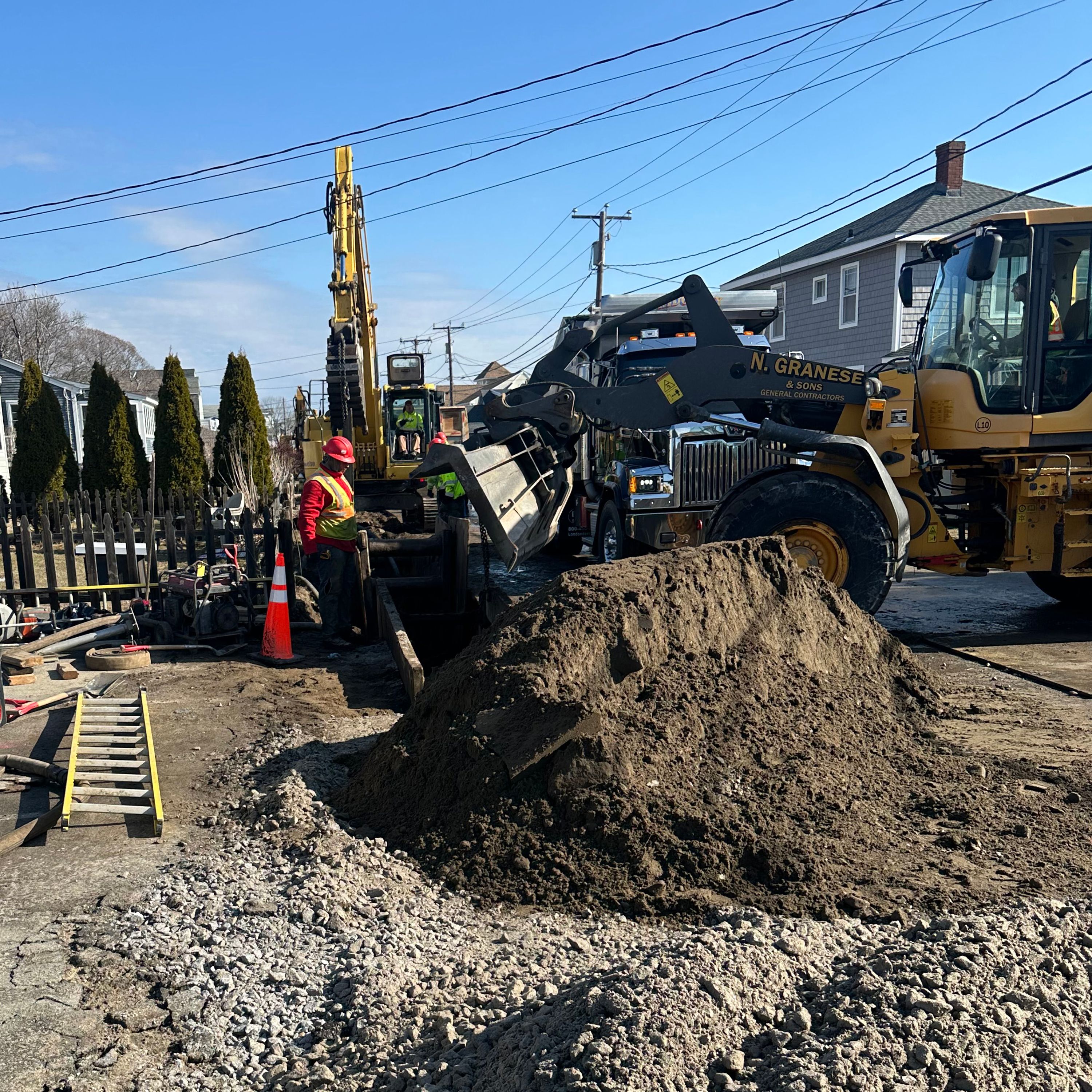
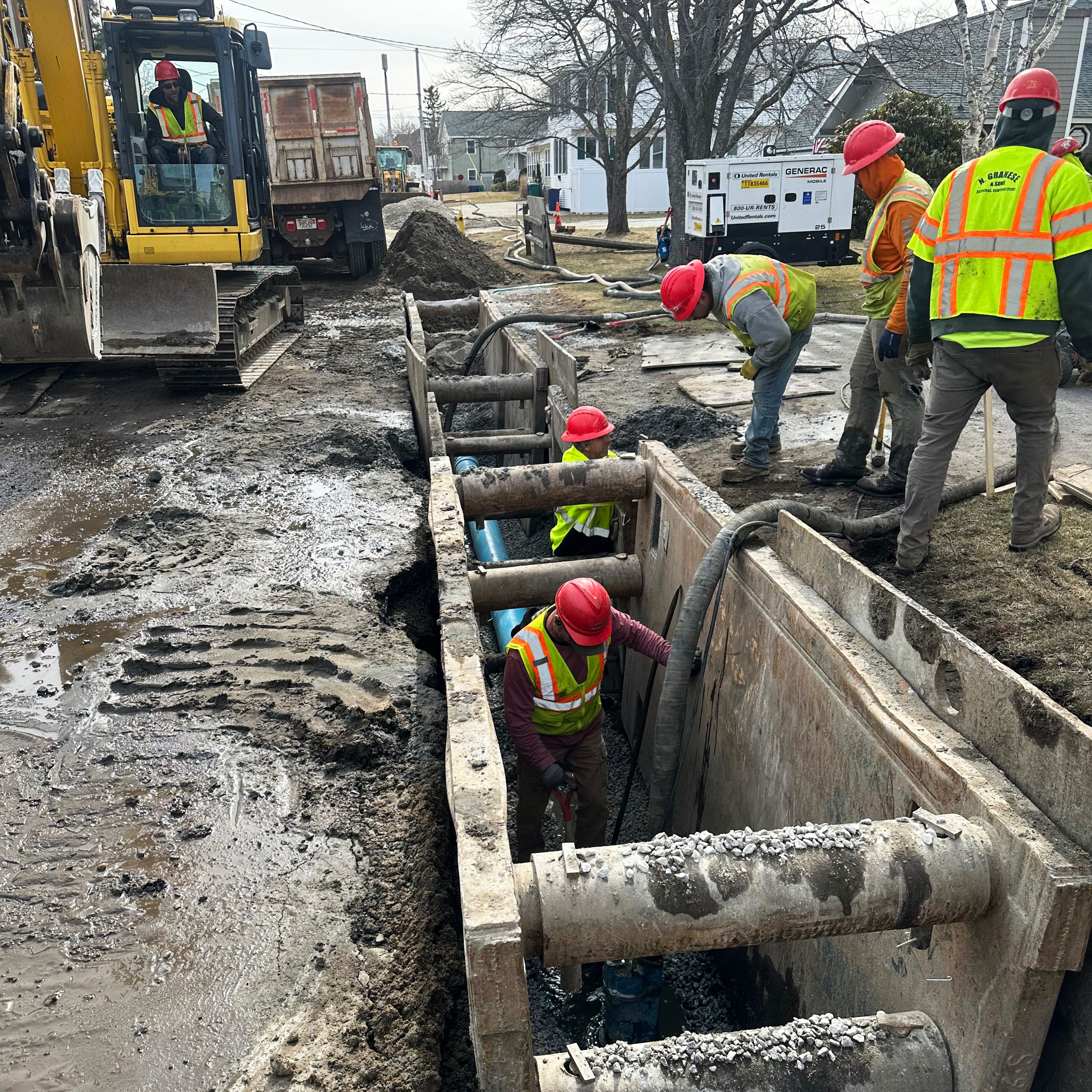
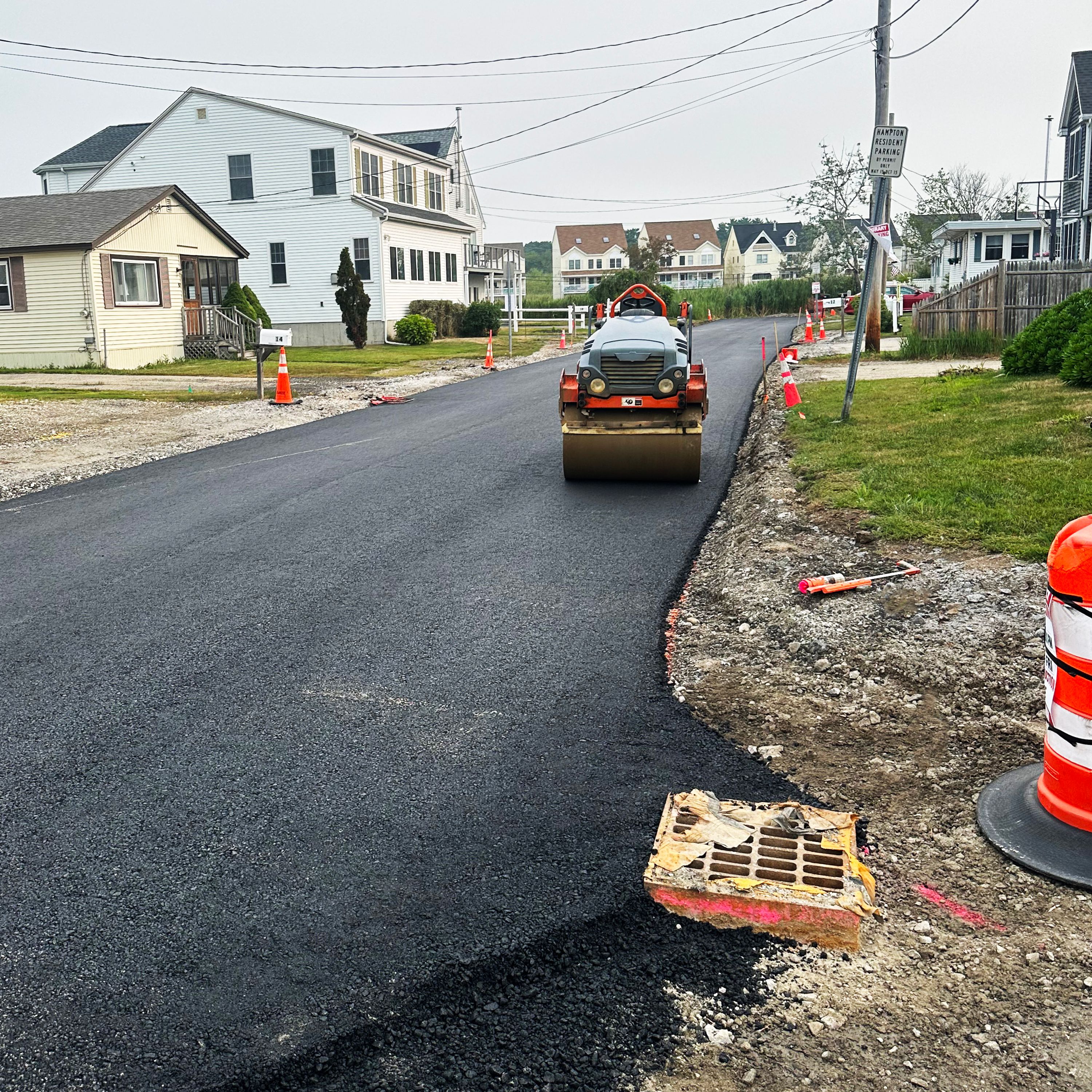
Construction of drainage and pumping infrastructure designed to reduce flooding and improve coastal resilience in Hampton's Meadow Pond neighborhood.
Repurposing infrastructure for stormwater management
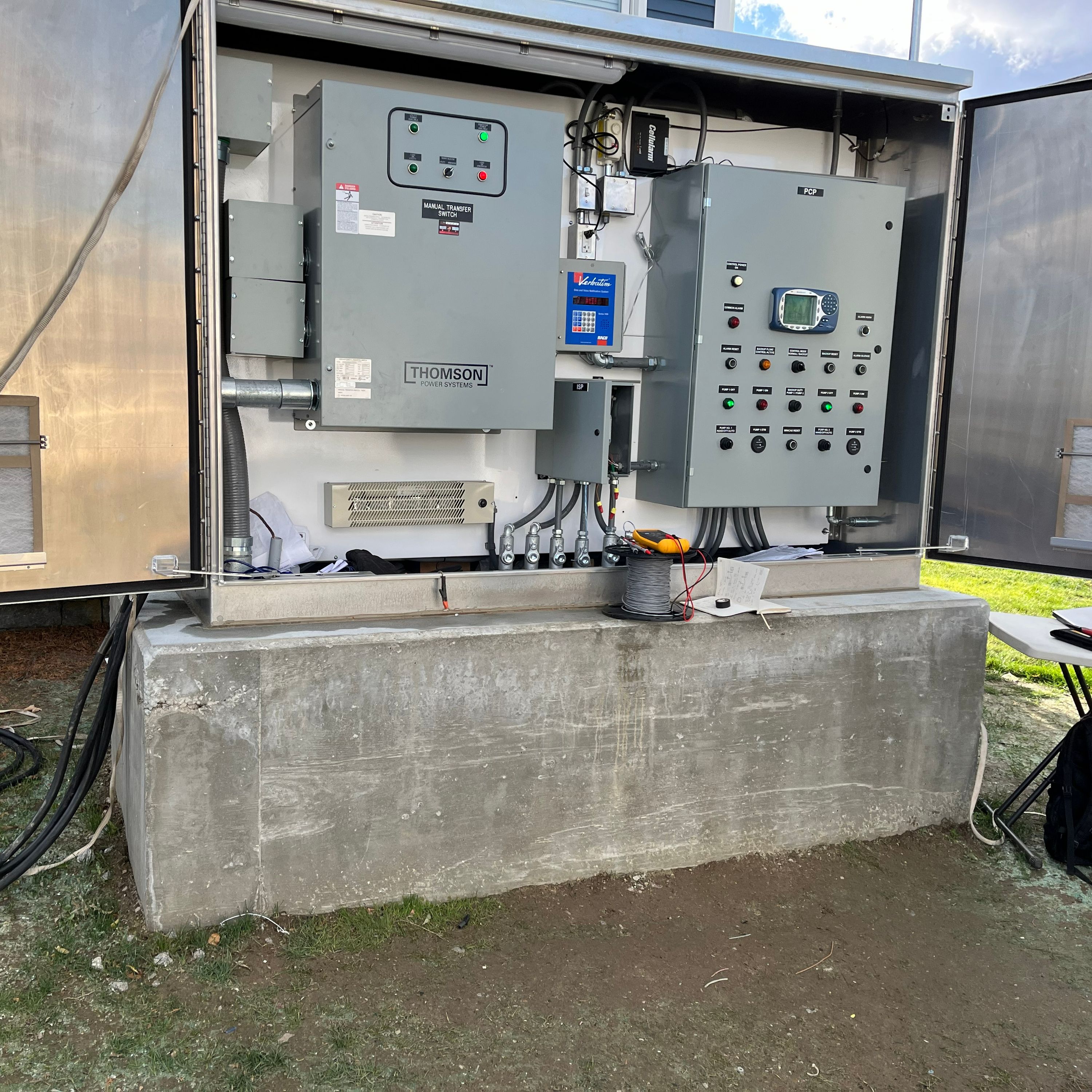
Based on these analyses, SLR developed a design to retrofit the former sewer pump station for use as a stormwater pump station. The proposed upgrades include new pumps and supporting equipment sized to accommodate projected stormwater flows during significant rainfall events. In addition, SLR designed a second pump station within the proposed manhole located at Greene Street and Kings Highway to help manage water collected within the neighborhood drainage system.
Together, the upgraded drainage infrastructure and pumping systems are designed to improve the movement of stormwater through the Meadow Pond neighborhood and along a portion of King’s Highway. The proposed improvements will help manage runoff when high tides limit gravity drainage and provide a means to remove water that would otherwise remain within the drainage network after storm events.
Impact
The design provides the Town with a clear, implementable strategy for improving drainage within the Meadow Pond neighborhood and advancing recommendations identified in the 2021 flood mitigation study. The project represents the first phase of a larger solution that can be implemented effectively and efficiently to help the residents and community in Hampton become more resilient to flooding, which is currently causing health, safety, and property damage concerns. Now that the project has been constructed, the results show that it has alleviated flooding during smaller, more common storm events and provides resilience to the neighborhood by enabling shorter recovery times during larger storm events and king tide cycles.
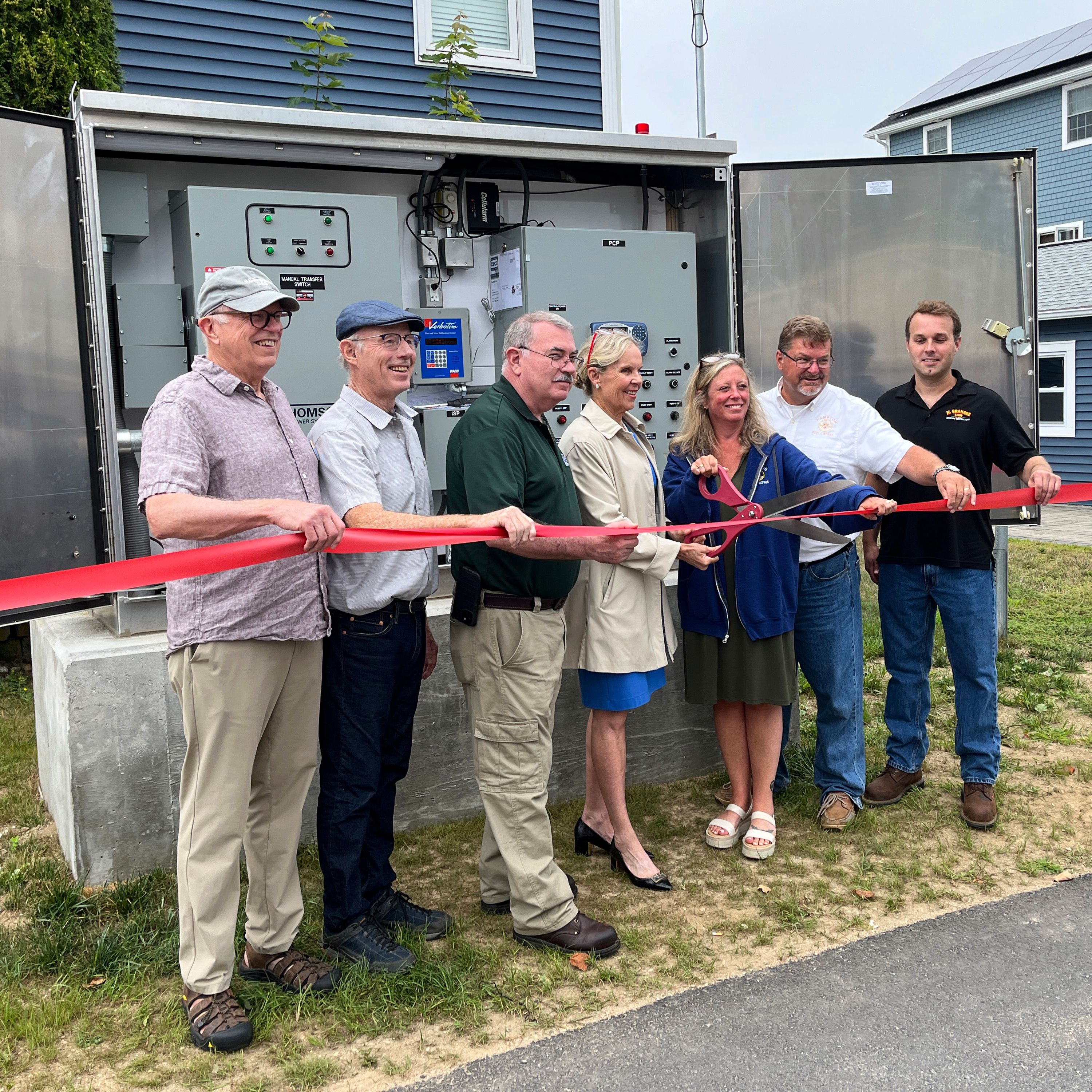
Ribbon cutting ceremony celebrating completion of the new stormwater pump station with local and state officials, project partners, and Hampton community members.
Building coastal resiliency through innovative drainage improvements
By repurposing existing town infrastructure, the project maximizes the value of those existing systems while incorporating targeted upgrades to improve system performance. The additional pump station at Greene Street and Kings Highway is designed to remove water remaining in neighborhood drainage pipes during and after storms, helping to reduce standing water, minimize the potential for freezing during colder months, and limit conditions that can contribute to mosquito breeding.
Overall, the project has strengthened Hampton's stormwater infrastructure, improved resilience to coastal flooding, and helped prepare the Meadow Pond neighborhood for the long-term impacts of sea level rise and increasingly frequent extreme weather events.
Learn more about SLR's Water Resources Engineering services and how we're helping communities address flooding, stormwater management, and climate resilience challenges.
Read more