
Your Scope 3 target has a price tag. Are you planning for it?
by Joe Sarvary, Catalina Morales
View post

At our first Making Sustainability Happen Live event for 2026, we brought together clients and specialists across the water, energy, built environment, and mining sectors to explore one of the most pressing topics in the market today: Environment Protection and Biodiversity Conservation (EPBC) reforms.
The strong turnout reflects a shared reality that these reforms are creating both uncertainty and opportunity for project proponents. So what do they actually mean in practice, and how should you respond?
The EPBC Act has underpinned Australia’s environmental approvals framework since 1999. However, following a major independent review, the Act was found to be ineffective in protecting environmental values and delivering efficient approvals.
The resulting reform bills, now passed and being rolled out through 2026, aim to address this by:
Key milestones include initial reforms introduced in February 2026, major changes from July 2026, and full implementation expected by December 2026. While faster approvals will be welcome news, they come alongside stricter compliance expectations and new approval tests.
One of the key messages from the event was that much of the existing framework remains intact. The core process from self-assessment through to approval will continue, as will the focus on impacts to matters of national environmental significance, and the Minister retains ultimate decision-making power.
However, several important changes will reshape how projects progress:
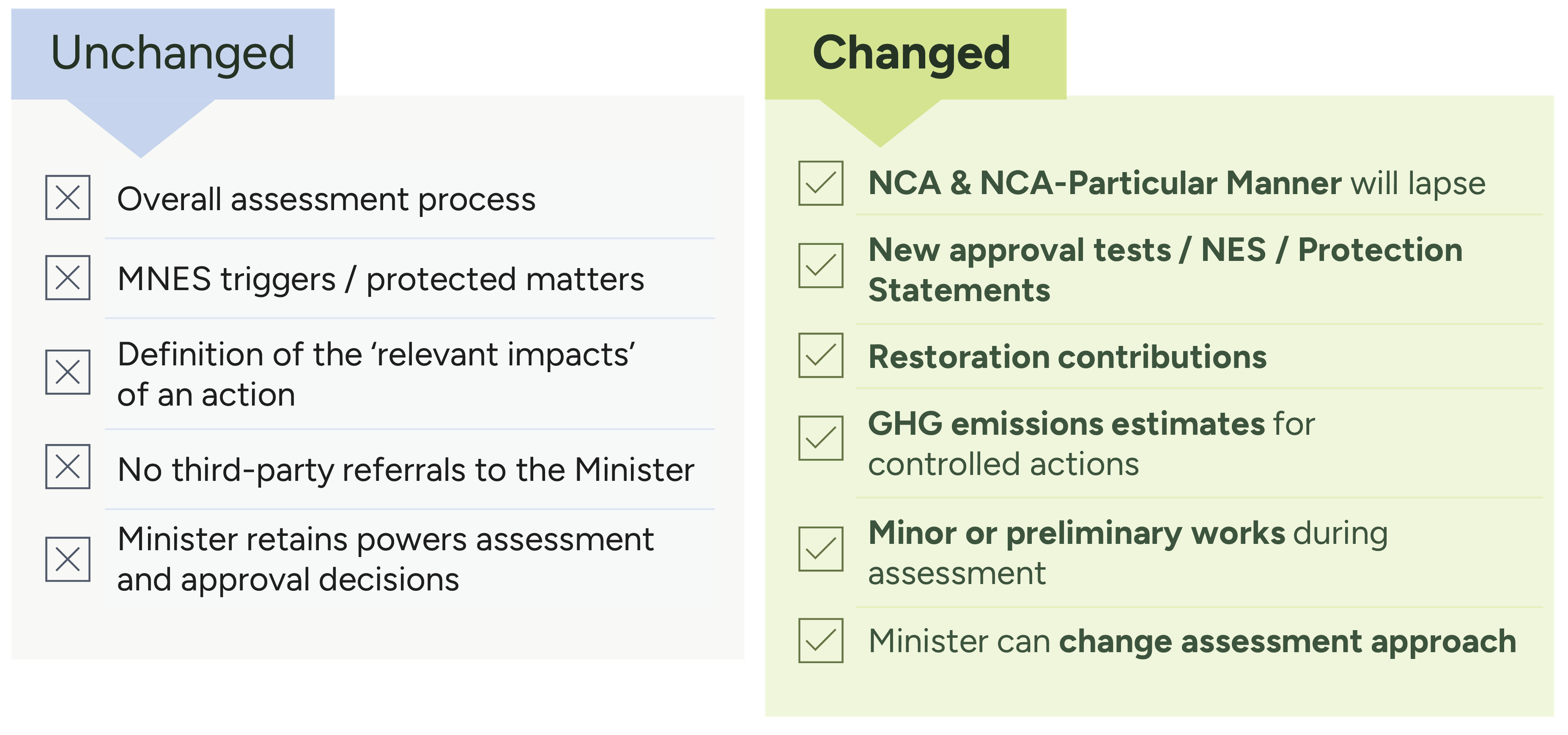
Two independent regulators will be introduced from July 2026:
These changes are likely to result in increased scrutiny, particularly in post-approval compliance, with NEPA having stronger auditing powers and higher penalties than seen in the past under the Act.
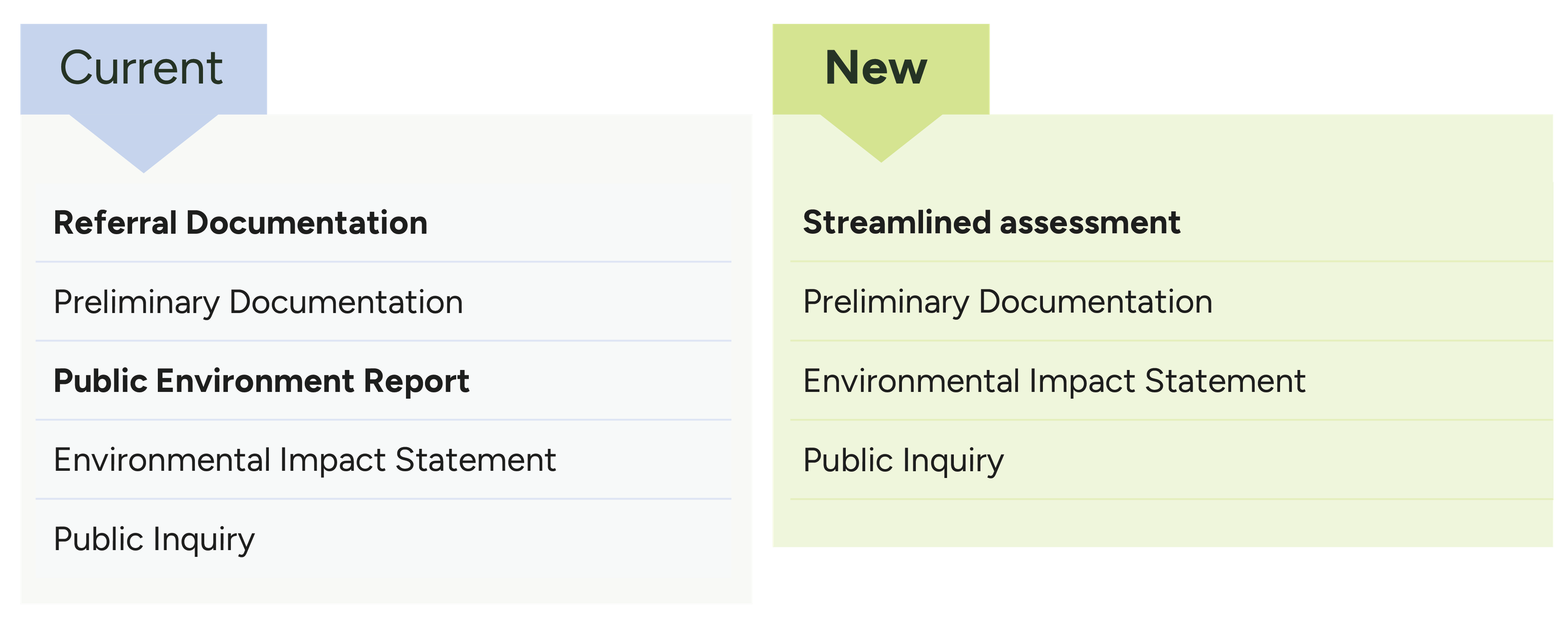
To improve efficiency, existing pathways are being consolidated, alongside the introduction of a streamlined assessment option. At the same time, some pathways, including assessment by referral documentation and Public Environment Reports will be removed.
The intention is a faster, more consistent process, but one that is likely to require stronger upfront information.
Two new tests will play a central role:
These tests are expected to drive earlier design changes and more robust impact assessments.
National Environmental Standards and Protection Statements will introduce legislated requirements that both proponents and regulators must follow.
For many practitioners, this represents a positive shift towards consistency and should reduce reliance on interpretation, whilst enabling more predictable outcomes across projects, underpinned by improved access to national environmental data (from the EIA).
The reforms introduce the option of a restoration contribution, allowing proponents to meet offset requirements through a financial mechanism rather than land-based offsets.
Despite the scale of change, there are clear advantages emerging, these include:
Greater certainty through consistent environmental assessments: Standardised requirements and clearer definitions should reduce variability in project evaluations, leading to more predictable timelines and more reliable advice for clients.
Potential for faster project approvals: The streamlined pathway offers an opportunity to accelerate approvals, particularly where projects are well-defined and supported by strong baseline data.
Improved project design and planning outcomes: With better environmental and early works data, proponents can refine project design earlier, reducing risk later in the process.
As expected, the transition phase introduces complexity.
Understanding transitional arrangements for your projects
The pathway your project follows will depend on its stage at key implementation dates, with different rules applying to projects already in assessment versus those yet to be referred. This creates strategic decisions about whether to progress now or align with the new framework.
Increased upfront environmental assessment requirements
There is likely to be a greater requirement for detailed ecological and planning information at the referral stage, and whilst this “front-loading” of effort may increase early costs, it also aims to reduce delays later.
Managing uncertainty as reforms are implemented
With many details, including standards and methodologies still being finalised, there is an inevitable period of ambiguity where early projects under the new system may experience some variability as processes settle.
While the reforms continue to evolve, several practical steps remain consistent:
At their core, these reforms are about balancing efficiency with stronger environmental outcomes. For project proponents, success will depend on being proactive, informed, and adaptable.
As we continue the Making Sustainability Happen Live series, we’ll keep sharing insights to help you navigate this evolving landscape, and ensure you’re well positioned to move forward with confidence.
Our Ecologists, Impact Assessment Practitioners, Planners, and water professionals bring in-depth, practical EPBC experience across the infrastructure, mining, energy, and built environment sectors.
by Joe Sarvary, Catalina Morales