Bridging the sustainability gap: Reflections from Textile Exchange 2026
- Post Date
- 21 October 2026
- Read Time
- 3 minutes
The implementation era
Over three crisp, clear days in October, more than 1,300 people came together for this year’s Textile Exchange conference in Vancouver, Canada.
Though the theme of the event was ‘The implementation era’, what struck me most in each of the conversations, whether on-stage or in breakouts, was the idea of connection.
The event began with a territorial welcome by Chief Janice George and Debra Sparrow, master weavers who reminded us of the many generations of skill and intelligence that are threaded together to create each garment that we wear – whether or not it is acknowledged.
Today’s consumers are mostly cut off from this story, and the further upstream you look, the harder it is to visualise. Our speakers spoke powerfully of the need to pick those narrative threads back up if we are to encourage more conscious choices at every step of a system most of us only see a tiny part of.
They were followed by a keynote from Professor Gail Whiteman, who balanced pragmatic optimism with stark warnings about our trajectory against planetary boundaries - or as she put it, “the KPIs for the planet”. Prof. Whiteman argued that heat stress is our biggest climate risk and yet is not meaningfully incorporated into the way we plan, either at a systemic or an individual business level.
Though these examples operate in different spaces – the social and the systemic – they speak to a common issue, one of distance. An idea that the topic in question is somehow removed from the groups that need to engage with it.
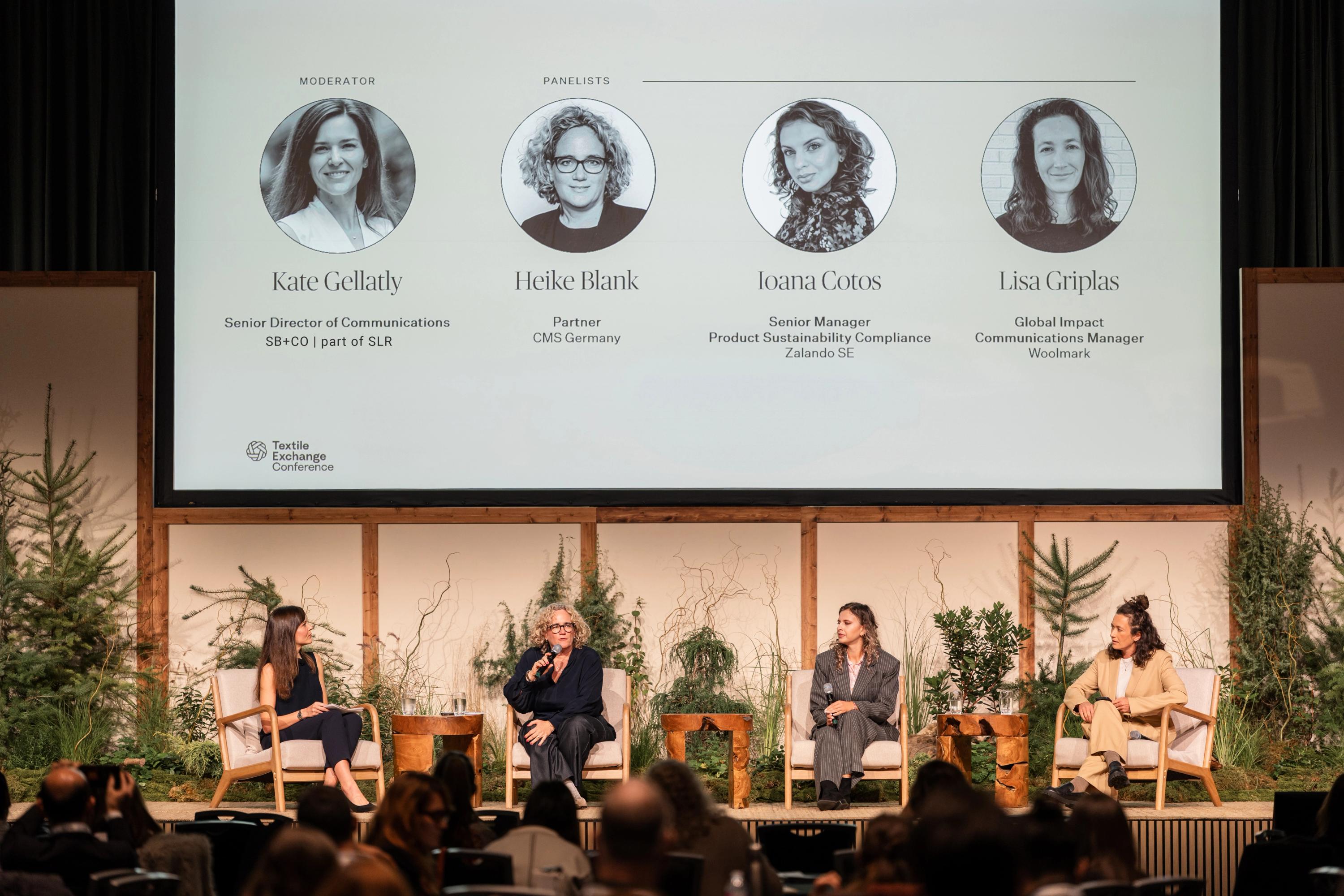
Sustainability leaders understand the scale of the challenge, but so often progress stalls when it comes to persuading wider groups that they too should sit up and pay attention and take action.
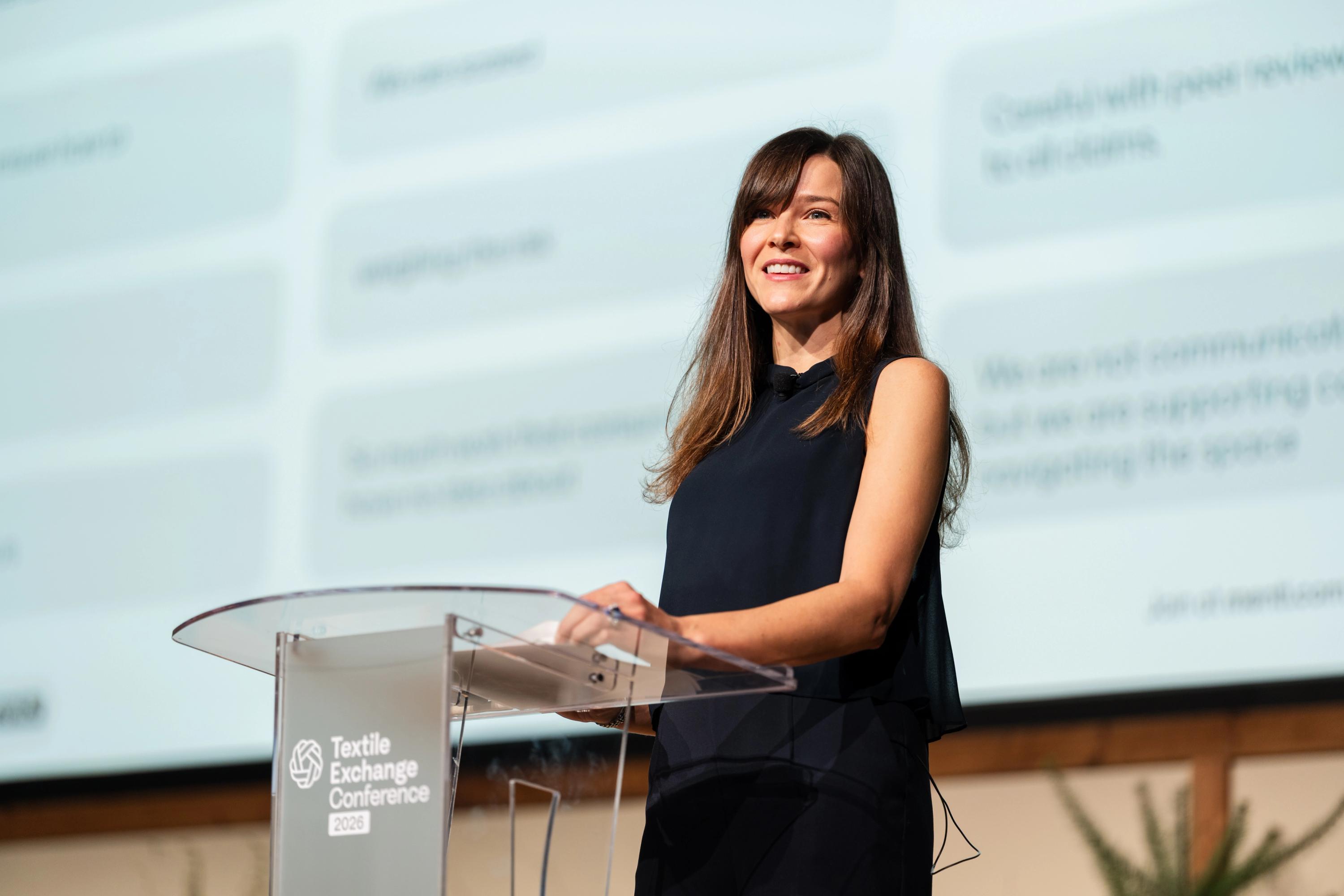
That gap, the one that exists between sustainability teams and their broader networks, is a key theme of research we conducted this year, which I presented to the Textile Exchange conference and which we published as a white paper during London Climate Action Week. In it, we explore the dangers of the sustainability language gap and what’s at stake when we fail to land messages in a way that is accessible and relevant to non-specialists.
We also talk in the Fashion edition of the paper about fashion as a lightning rod for scrutiny, thanks to its high visibility and high consumer-orientation. But those unique characteristics also offer an opportunity. Fashion businesses can be guiding lights, telling richer stories about the crops and materials that become the fabrics that, in turn, become the garments we touch, wear and use every day. With that openness often comes nervousness, particularly when messages include trade-offs or challenges, but businesses should give audiences credit. Many can hold complex concepts comfortably, and reward greater candour when it’s offered.
In her keynote, CEO of Textile Exchange Claire Bergkamp characterised 2026 as “a year under pressure – a lot of fatigue, a lot of competing priorities.” I know from speaking with practitioners across many sectors that this feeling extends far beyond fashion and apparel, but so does the steely determination to keep pushing for better, to keep pulling the threads together, to keep doing the work.
As we move from the ‘why’ and into the ‘how’ on making sustainability happen, we have a responsibility as advisors to connect our work to the very heart of businesses. From strategy setting to value chain engagement, climate risk to energy optimisation, social impact to nature resiliency – storytelling can be the bridge between ambition and action, and in the right hands can help us go further, faster.
Recent posts
-
-

-

Data centre backup power may be temporary, but its air quality impacts aren’t
by Ben Turner
View post