Energy shocks and private market resilience: Why the Gulf Crisis matters for private markets
- Post Date
- 26 August 2026
- Read Time
- 11 minutes
Amid severe humanitarian consequences and extensive geopolitical tension, the 2026 Gulf Crisis has seismically shifted global economies, introducing a notable effect on private market capital allocation. The evolving landscape has solidified the vital role that investment managers play in positioning portfolios for resiliency during times of global instability. This article examines their role in managing geopolitically triggered energy supply disruptions – using the 2026 Gulf Crisis as a point of reference – and outlines best practices for portfolio resilience.
How does geopolitical tension impact the private market?
Geopolitical shocks create risks and opportunities for private markets investors, transmitting through the same channels that expose portfolio companies directly: valuations, capital availability, and deal activity. Recent cases (e.g., Russia's invasion of Ukraine, Brexit, and U.S.-China tariffs) illustrate how international crises can inflict tangible impacts on the global economy from which private markets are not wholly insulated. [1] Illustratively, the International Monetary Fund (IMF) found that stock valuations drop, on average, 2.5 percentage points should a country be implicated in an international crisis. [2] The UN Trade and Development (UNCTAD) body found that global foreign direct investment (FDI) decreased by over 11% in 2024, citing international crises as a direct constraint on the capital available for private market deployment. In 2023, the total M&A activity dropped 15% to a valuation of $3.2 trillion – the lowest level in a decade. A Bain & Company analysis determined international trade tensions and geopolitical risks to be a major contributing factor to this historical slump, curbing exit opportunities for existing portfolios and leaving sellers and buyers in a stalemate. [3] In short, geopolitical shocks reach private markets through depressed entry valuations, constrained fundraising, and slower exits – the same three levers investment managers rely on to generate return.
Historical context
Across 20 major post–Second World War military interventions, the S&P 500 declined by an average of roughly 6% from the initial shock to its trough, suggesting that geopolitical instability can trigger short-term market drawdowns. In 19 of those cases however, the index recovered to pre-event levels within about 28 days, implying that economic changes-of-state hinge on whether disruptions, such as sustained increases in energy prices, persist long enough to affect broader consumer confidence. [4] An event that did persist long enough to show impacted consumer confidence was the 1973 oil shock, when S&P 500 returns fell by 37 percentage points in twelve months, and resulted in "stagflation" due to limitations to oil availability. [5] For private market investors, the distinction matters: a short-lived shock is a valuation dip to underwrite through, while a sustained one, as 1973 and the current Gulf crisis both suggest, can restructure the cost basis and demand environment portfolio companies operate in for years.
The 2026 Gulf Crisis
On February 28, 2026, the US and Israel launched coordinated strikes against military and nuclear sites in Iran, catalysing a conflict which has resulted in heightened geopolitical tensions and global economic strain. [6] Economic impacts are largely the result of the associated restriction of the Strait of Hormuz, through which roughly a quarter of seaborne oil and a fifth of liquified natural gas (LNG) flow. The International Energy Agency (IEA) has identified the resulting supply disruption as the largest in the history of the global oil market. [7] Brent crude, widely accepted as the global benchmark for crude oil pricing, surged more than 40% in the opening weeks of the conflict. Freight rates, bunker fuel costs, and war risk insurance premiums rose in tandem, feeding through supply chains and raising global production and distribution costs. [8] Critically, exposure is not only confined to energy-intensive sectors: scenario modeling of the iron ore supply chain found that shipping and fuel shocks could drive a potential 11.3% increase in the global cost basis. [9] The role of natural gas as key feedstock in fertiliser production drives up international grain prices, another externality that is then infused into national markets and the consumer's basket. [10]
In May 2026, the Consumer Price Index reached its highest point in three years, an increase primarily attributed to the surge in energy prices due to the Gulf Crisis. [11] While some experts maintain that the economy has shown unexpected resiliency amid the conflict, pointing to the S&P 500's historic peak in early June 2026 as an example, leaders have expressed concern that disruption may continue to sustain inflation, potentially resulting in business-critical stagflation. [12] In March 2026, McKinsey found that 72% of surveyed executives deemed geopolitical instability as one of the most significant threats to economic conditions, a 21% increase from respondents in December 2025. [13] The survey also identified sharp spikes in energy price and supply chain disruption-related concerns post February 28. That concern is not evenly distributed, however: while some entities have been directly disadvantaged by the crisis's restrictions (e.g., those involved in the procurement, management, distribution, or insurance of assets produced in the Gulf), a far greater amount of downstream entities face risk. Industries dependent on oil and gas, such as aviation, manufacturing, shipping and logistics, and vital raw materials like urea, helium, and sulfur for manufacturing and agriculture, are among those most impacted. [14]
What is on the horizon?
On June 15, 2026, the US and Iran signed a framework agreement to end hostilities, lift the US naval blockade, and reopen the Strait of Hormuz, both sides committing to 60 days of follow-on negotiations over Iran's nuclear programme, sanctions, and regional security. Brent crude fell roughly 4.8% on the news to settle near $83 a barrel, its lowest price since early March. However, the 60 days have now expired, and the two nations do not appear to be any closer to an agreement with hostilities, and the closure of the straight, still ongoing. The oil market seems to be treating this as a new reality; Crude is now holding steady around $90 a barrel representing a 50% increase from the start of the year [15].
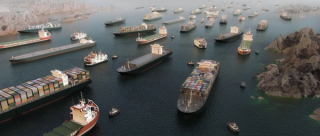
Even with a deal in place, the energy market will not immediately return to pre-crisis status. Speaking before the deal, Saudi Aramco CEO Amin Nasser warned that even if the strait opened that day, it would take months for the market to rebalance, citing more than 600 ships stuck in the Gulf and a global fleet "mixed up.” [16] Shipping operators report that confidence in fleet and crew safety is strained given persistent threat of mines, drones, and missile attacks. [17]
Richard Meade, editor-in-chief of Lloyd's List Intelligence, shared a warning that is likely to outlast the conflict itself: “Once the strait has been closed once, it can be closed again.” [18] That structural vulnerability is already reshaping behavior, with shippers and governments rerouting to minimise reliance on Hormuz, but the shift merely relocates concentration risk to alternative chokepoints such as the Strait of Malacca, rather than eliminating it. The lesson for investment managers is not specific to Hormuz: concentrated global energy supply chains carry a durable, recurring risk that this crisis has simply laid bare, one that demands robust capital allocation and protection strategies.
Read part two, where we take a look at the practical investment manager response: where capital is moving, how existing portfolios are being protected, and what steps managers can take to build energy resilience before the next disruption occurs.
How investment managers can build energy resilienceReferences
- https://www.vaneck.com/us/en/blogs/model-portfolios/how-to-protect-portfolio-from-geopolitical-shocks/; https://www.bain.com/insights/private-equity-outlook-global-private-equity-report-2023/
- https://www.imf.org/en/blogs/articles/2025/04/14/how-rising-geopolitical-risks-weigh-on-asset-prices
- https://www.bain.com/insights/looking-back-m-and-a-report-2024/; https://unctad.org/publication/world-investment-report-2024; https://unctad.org/publication/world-investment-report-2025
- https://www.rbcwealthmanagement.com/en-us/insights/then-and-now-market-reactions-to-military-conflicts-and-what-they-mean-today
- https://privatebank.jpmorgan.com/nam/en/insights/markets-and-investing/how-do-geopolitical-shocks-impact-markets
- https://www.cfr.org/global-conflict-tracker/conflict/confrontation-between-united-states-and-iran
- https://www.iea.org/topics/the-middle-east-and-global-energy-markets
- https://unctad.org/publication/strait-hormuz-disruptions-implications-global-trade-and-development
- https://www.spglobal.com/market-intelligence/en/news-insights/research/2026/03/strait-of-hormuz-iron-ore-cost-impact
- https://unctad.org/publication/strait-hormuz-disruptions-implications-global-trade-and-development
- https://www.cnbc.com/2026/06/10/cpi-inflation-report-may-2026.html; https://www.cbsnews.com/news/cpi-report-today-may-2026-inflation-iran-war-trump/
- https://www.cnbc.com/2026/06/07/iran-war-100-days-trump-stocks-sp500-bonds-oil.html; https://www.cnbc.com/2026/04/18/iran-war-inflation-prices-energy-trump-economy-end.html; https://www.investing.com/analysis/iran-oil-shock-what-100-days-of-war--mean-for-investors-200681670; https://cepr.org/voxeu/columns/quantifying-impact-iran-war-us-inflation; https://www.reuters.com/world/us/us-consumer-prices-increase-expected-may-2026-06-10/
- https://www.mckinsey.com/capabilities/strategy-and-corporate-finance/our-insights/economic-conditions-outlook#/
- https://www.oxfordcollegeofprocurementandsupply.com/how-the-iran-conflict-is-disrupting-global-supply-chains/; https://www.reuters.com/business/energy/who-hurts-most-iran-war-hits-global-economy-2026-03-20/; https://www.imf.org/en/blogs/articles/2026/03/30/how-the-war-in-the-middle-east-is-affecting-energy-trade-and-finance; https://www.reedsmith.com/media/elkj1wbz/gulf_conflict_-_challenges_affecting_businesses_in_the_energy_sector_-_12_march_2026.pdf
- https://www.reuters.com/commentary/reuters-open-interest/oil-market-starts-pricing-prolonged-hormuz-crisis-2026-08-18/
- https://www.dw.com/en/iran-war-even-a-peace-deal-wont-fix-energy-crunch/a-77322623
- https://www.cnbc.com/2026/07/30/strait-hormuz-drone-shipping-risks.html; https://www.reuters.com/world/middle-east/some-ships-refusing-us-military-guided-hormuz-transits-after-attacks-sources-say-2026-07-15/; https://www.rfi.fr/en/international/20260625-fear-of-mines-alone-can-disrupt-strait-of-hormuz-shipping-warns-french-admiral-iran
- https://www.npr.org/2026/06/08/nx-s1-5848001/the-strait-of-hormuzs-3-month-closure-could-set-a-dangerous-precedent-experts-worry
- https://www.cbh.com/insights/reports/private-equity-report-2025-trends-and-2026-outlook/
- https://www.cbh.com/insights/reports/private-equity-report-2025-trends-and-2026-outlook/
- https://www.fticonsulting.com/insights/articles/power-renewables-energy-transition-2025-ma-year-review-2026-outlook
- https://www.pwc.com/us/en/industries/energy-utilities-resources/library/energy-deals-outlook.html
- https://www.mckinsey.com/capabilities/strategy-and-corporate-finance/our-insights/economic-conditions-outlook#/
- https://www.pwc.com/us/en/industries/financial-services/library/private-equity-deals-outlook.html
- https://www.iea.org/reports/energy-and-ai/energy-demand-from-ai
- https://apnews.com/article/trump-solar-coal-mining-climate-electricity-50250099a4e94384af4aa9f197d62403
- https://www.iea.org/reports/world-energy-investment-2026
- https://www.bain.com/insights/decarbonization-that-works-five-key-actions-in-private-equity-ceo-sustainability-guide-2025/; https://www.fticonsulting.com/insights/articles/esg-sustainability-trends-private-capital-2026
Recent posts
-
-
Data centre backup power may be temporary, but its air quality impacts aren’t
by Ben Turner
View post -