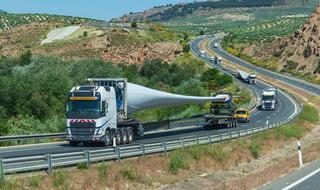
Understanding traffic and transport risks in onshore wind projects
by Charlie Seventekin, Ian Cronshaw
View post

The environmental regulatory landscape in Europe is undergoing one of its most significant transformations in decades. In April 2026, ISO published the revised ISO 14001:2026 standard, introducing stronger requirements around leadership, environmental risk management, climate considerations, lifecycle thinking, and organisational change management. At the same time, the revised Industrial Emissions Directive (IED 2.0) is being transposed into national legislation across the European Union, bringing stricter environmental performance expectations, mandatory environmental management systems, enhanced transparency requirements, and greater emphasis on resource efficiency.
Viewed independently, each development already represents a substantial change. Taken together, they reveal a much broader trend: environmental management is evolving further than the compliance exercise. It is increasingly becoming a core business discipline that influences investment decisions, operational performance, risk management, stakeholder confidence, and long-term competitiveness.
For industrial operators, this raises an important question. Is environmental management still primarily about maintaining compliance and preserving certification, or has it become an essential component of business transformation?
The revised ISO 14001 standard and IED 2.0 originate from different worlds. The first one is a voluntary international management system standard, while the other is a legally binding regulatory framework. Yet both are moving organisations in the same direction.
ISO 14001:2026 strengthens the management system itself. It places greater emphasis on leadership accountability, environmental governance, climate-related risks, organisational resilience, lifecycle thinking, and structured management of risks and opportunities. The revised standard also introduces a dedicated requirement for managing environmental risks and opportunities and formalises expectations around planning organisational change. At its core, the revision seeks to ensure that environmental management becomes more integrated with overall business strategy and decision-making.
IED 2.0 focuses on environmental performance outcomes. The revised directive expands regulatory coverage, tightens emissions-related expectations, strengthens alignment with Best Available Techniques (BAT), increases transparency obligations, and introduces mandatory environmental management system requirements for regulated installations. It also places greater focus on resource efficiency, including energy, water and raw material consumption, reflecting the EU's broader ambitions around circularity and the transition towards a low-carbon economy.
The result is that environmental management systems are no longer expected merely to manage permits and regulatory obligations. They are expected to provide the governance framework through which organisations manage environmental performance, operational risks, resource efficiency, transformation programmes, and long-term sustainability objectives.
Many industrial organisations already have mature environmental management systems and have maintained ISO 14001 certification for years. It would be easy to assume that compliance with the new requirements will require only minor adjustments. In practice, however, many organisations may discover that their existing systems were designed primarily to support regulatory compliance and certification audits rather than strategic environmental performance management.
Traditional environmental management systems often focus on legal registers, environmental objectives, operational controls, incident management, and internal audits. While these remain essential, the new landscape demands additional capabilities. Organisations will increasingly be expected to understand environmental risks across their value chain, assess climate-related impacts on operations, manage resource efficiency performance, demonstrate stronger governance, and integrate environmental considerations into strategic planning and investment decisions.
Similarly, many facilities operating under ISO 14001 may assume that certification automatically satisfies the environmental management system requirements emerging from IED 2.0. However, regulatory expectations are becoming increasingly specific. Environmental performance indicators, monitoring requirements, resource-efficiency metrics, chemical management processes, and transformation planning expectations may require significant enhancements to existing management systems.
The challenge is therefore not simply updating procedures. It is ensuring that environmental management systems are capable of supporting both regulatory compliance and broader business objectives.
Perhaps the biggest obstacle facing industrial companies is not technology, regulation, or even compliance costs. It is organisational fragmentation.
SLR has observed that many organisations manage environmental objectives and compliance requirements across multiple functions, with significant overlap between teams responsible for environmental compliance, sustainability, energy management, procurement, operational performance, and corporate reporting. For example, under ISO 14001, facilities teams may focus on energy performance and operational controls, while sustainability teams lead environmental data management and reporting. Similarly, compliance with IED 2.0 may require input from energy, procurement, waste, and supply chain functions.
While these functions often contribute to common organisational objectives, they frequently operate with different priorities, unclear accountability, performance metrics, inconsistent data management, and reporting structures. As a result, limited communication and coordination can lead to siloed working, duplicated effort, inconsistent data, unclear ownership, conflicting priorities, and missed opportunities to identify efficiencies, and deliver integrated environmental improvements. Environmental compliance may be managed separately from broader sustainability objectives, while strategic environmental initiatives may not always be fully connected to regulatory obligations and operational realities.
The requirements emerging from ISO 14001:2026 and IED 2.0 increasingly cut across all of these disciplines. For example, climate-related risks influence strategic planning, operational continuity, supply chains, and environmental performance. Resource efficiency data is relevant not only for regulatory reporting but also for operational improvement and investment prioritisation. Environmental risks have implications for governance, insurance, financing, permitting, stakeholder relations, and corporate reputation. As a result, managing these issues through disconnected processes is becoming increasingly difficult. In our experience, ISO 14001 can serve as an effective governance framework for bringing these functions together through aligned objectives, clearly defined responsibilities, and improved cross-functional communication. Organisations that succeed will be those that establish a coherent governance framework capable of connecting environmental compliance, operational performance, sustainability objectives, and business strategy.
Although many organisations initially view new environmental requirements as an administrative burden, there is another perspective. The combination of ISO 14001:2026 and IED 2.0 creates a unique opportunity to modernise environmental management and unlock business value.
A stronger environmental management system can improve visibility over operational risks, identify resource-efficiency opportunities, strengthen permit resilience, reduce compliance costs, and support capital investment decisions. Resource efficiency improvements frequently deliver tangible cost savings through reduced consumption of energy, water, and raw materials. Enhanced monitoring and governance can also help organisations identify performance gaps before they develop into regulatory or operational issues.
At the same time, investors, lenders, customers, and regulators are increasingly seeking evidence that organisations can manage environmental risks effectively and demonstrate continuous improvement. Robust environmental management systems provide a structured framework to support those expectations while strengthening organisational credibility.
Another system gaining traction is ISO 50001. We're seeing a steady rise in requests for compliance support here. It isn't mandated under IED 2.0, but companies increasingly see it as the most practical tool for operators to meet the directive's energy efficiency and management-system expectations. We'll share dedicated insights on ISO 50001 soon as the takeaway is clear: environmental management systems need a strategic approach.
So, rather than treating ISO 14001:2026 and IED 2.0 as separate compliance projects, organisations have an opportunity to create a single implementation programme that supports regulatory obligations, operational performance, ESG objectives, and future business resilience.
The next several years will be critical.
A practical starting point is a combined gap assessment against both ISO 14001:2026 and the emerging national implementation requirements under IED 2.0. Such an assessment should evaluate management system maturity, governance arrangements, environmental data quality, resource-efficiency monitoring, risk management processes, and readiness for future BAT-related obligations.
Organisations should then establish a roadmap that links environmental compliance requirements with broader business priorities. This typically includes strengthening governance structures, enhancing environmental performance monitoring, integrating risk and opportunity management processes, developing robust change-management procedures, and improving visibility over value-chain impacts.
For many industrial operators, this period also provides an opportunity to align environmental management systems with wider decarbonisation, resource efficiency, and sustainability programmes, reducing duplication while creating a more integrated approach to environmental performance management.
The timelines are already taking shape. ISO 14001:2026 was published in April 2026 and is expected to be accompanied by a three-year transition period for existing certified organisations. Meanwhile, EU Member States are required to transpose IED 2.0 into national law by mid-2026, with environmental management system obligations becoming increasingly relevant from 2027 onwards.
Organisations that begin preparing now can spread investments, align compliance activities with operational improvement programmes, and avoid rushed implementation efforts. Those who delay may find themselves simultaneously facing certification transition requirements, regulatory change, resource-efficiency obligations, and increasing stakeholder scrutiny.
The convergence of ISO 14001:2026 and IED 2.0 marks a fundamental shift in expectations. Environmental management systems are evolving from tools designed primarily to demonstrate compliance into strategic operating frameworks that underpin resilience, efficiency, transparency, and long-term value creation.
Industrials should ask their environment, compliance, energy and sustainability teams if their existing systems for environmental management are ready to support the demands of the next decade. Organisations that view this transition as an opportunity to review their environmental governance model can create significant value. By clarifying ownership, strengthening accountability, improving data flows and aligning environmental objectives across functions, businesses can reduce duplication, improve decision-making, and accelerate environmental performance improvements while maintaining regulatory compliance. In this context, ISO 14001 should not be viewed solely as a certification framework, nor IED 2.0 as simply another compliance obligation. Together, they provide an opportunity to establish a more integrated operating model in which environmental management becomes a strategic business capability that supports resilience, efficiency, investment planning, and long-term competitiveness.
When ready, businesses will be better positioned to manage risk, optimise resources, accelerate transformation, and strengthen their competitive advantage in an increasingly demanding operating environment.
As strategic partners, we see these changes as a business transformation opportunity. The companies that successfully bridge the gap between regulatory performance and strategic environmental management will thrive in Europe's next industrial chapter.
Get in touch with our team to see how we can support your business.
Contact usJoin James Hartshorn, Practice Manager, Corporate Sustainability at SLR, Barbara Kuryk, Energy Sector Leader at SLR, Josh Jacobs, Managing Director at WAP Sustainability (part of SLR), and Matthew Bernier, an associate in the Municipal, Planning & Environmental Group at Cassels Brock & Blackwell LLP, for a practical look at what ISO 14001:2026 means for organisations preparing to transition.
Date: Tuesday 15 September 2026
Time: 11:00 (ET) / 16:00 (BST) / 17:00 (CEST)
Find out more and register