SBTi Corporate Net-Zero Standard Version 2.0
by Jovontae Catline , Caroline Dolan, Joe Sarvary, Liz Whinnett
View post
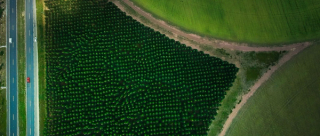
The humble kiwi fruit makes a journey from New Zealand to New York in a tightly choreographed act, involving multiple transportation modes and stakeholders, passing through many hands across thousands of miles until it reaches your pantry.
As climate change increases the likelihood of extreme weather events worldwide, that journey becomes more fraught. Extreme rainfall may flood orchards, while heatwaves may cause railway tracks to buckle, disrupting delivery schedules. This means that in order to keep bringing food to our tables and mitigate financial losses, agricultural corporations and their investors need to be proactive about future-proofing their supply chain.
The first challenge of futureproofing a food supply chain often involves gaining a comprehensive understanding of climate risks.
Agricultural and logistics operators would be well-placed to know that this is a two-step process, including safeguarding physical assets or “nodes” such as farms and processing facilities, as well as the linear assets or “connectors”, such as transport routes between the nodes. Conducting a comprehensive assessment along the entire supply chain not only prevents disruptions but also reveals strategic growth opportunities. This article outlines why this comprehensive approach matters, how to implement it, and what we advise clients to look for in the data that drives forward-looking decisions.
What are linear assets in logistics?
Linear assets are infrastructure systems characterised by their linear, spatially distributed nature. In logistics, your risk is distributed across:
In 2024, the cost of natural disasters reached US$320 billion, a significant increase from the inflation-adjusted US$268 billion in 2023. In particular, extreme weather events, such as hurricanes, severe storms, and floods, were responsible for 93% of overall losses [1]. Agricultural corporations’ CEOs and board members must be aware that their stakes are even higher due to their reliance on the cold chain [2].
Earlier in 2022, floods in Lismore, New South Wales, Australia damaged 90% of the local road network [3], blocking transport access and leaving supermarket shelves empty for up to four months. In the same year, floods in South Australia cut off the Trans-Australian railway, a critical link transporting 80% of Western Australia’s food supplies [4].
These events highlight the vulnerability of the supply chain to extreme weather events, creating food insecurity for communities and financial losses for corporations. By understanding how shifting climate patterns affect agricultural production [5] and the supply chain, CEOs and board members can also identify new opportunities for future business growth. For example, warming temperatures can create new opportunities and industries, such as white wine production in the UK [6].
Our climate data and risk analysis for companies has similarly uncovered a range of emerging opportunities for agricultural producers. Investing early in climate intelligence enables providers to plan ahead and start diversifying their product offerings and/or shift consumption patterns in ways that will better align with this new reality, futureproofing agricultural production and helping safeguard food security.
To minimise the economic loss from climate-related disruptions and capitalise on unique opportunities, companies must assess exposure across the entire lifecycle and supply chain of the product. Asset-level climate risk assessments enable owners and business leaders to understand how certain climate perils could affect their property. It is crucial that companies obtain high-quality, granular climate data to support informed decision-making for risk reduction and insurability.
The first step to future-proofing our food supply chain is assessing risks and opportunities for physical assets at specific sites, such as farms and processing facilities. This involves understanding how specific hazards affect commodity production and operations. For example, how will heat stress affect dairy production volumes in New Zealand? Which retail stores are most vulnerable to flooding?
Discerning producers are also considering their transport routes — the connectors to the nodes. These are “linear assets” which include infrastructure such as railways, roads, as well as pipelines, and power lines. Efficient, reliable transportation is the pulse of a functioning food supply chain.
Assessing exposure along a product’s entire journey from farm to shelf is a smart strategic move, ensuring that supply chains do not get derailed by rogue weather events.
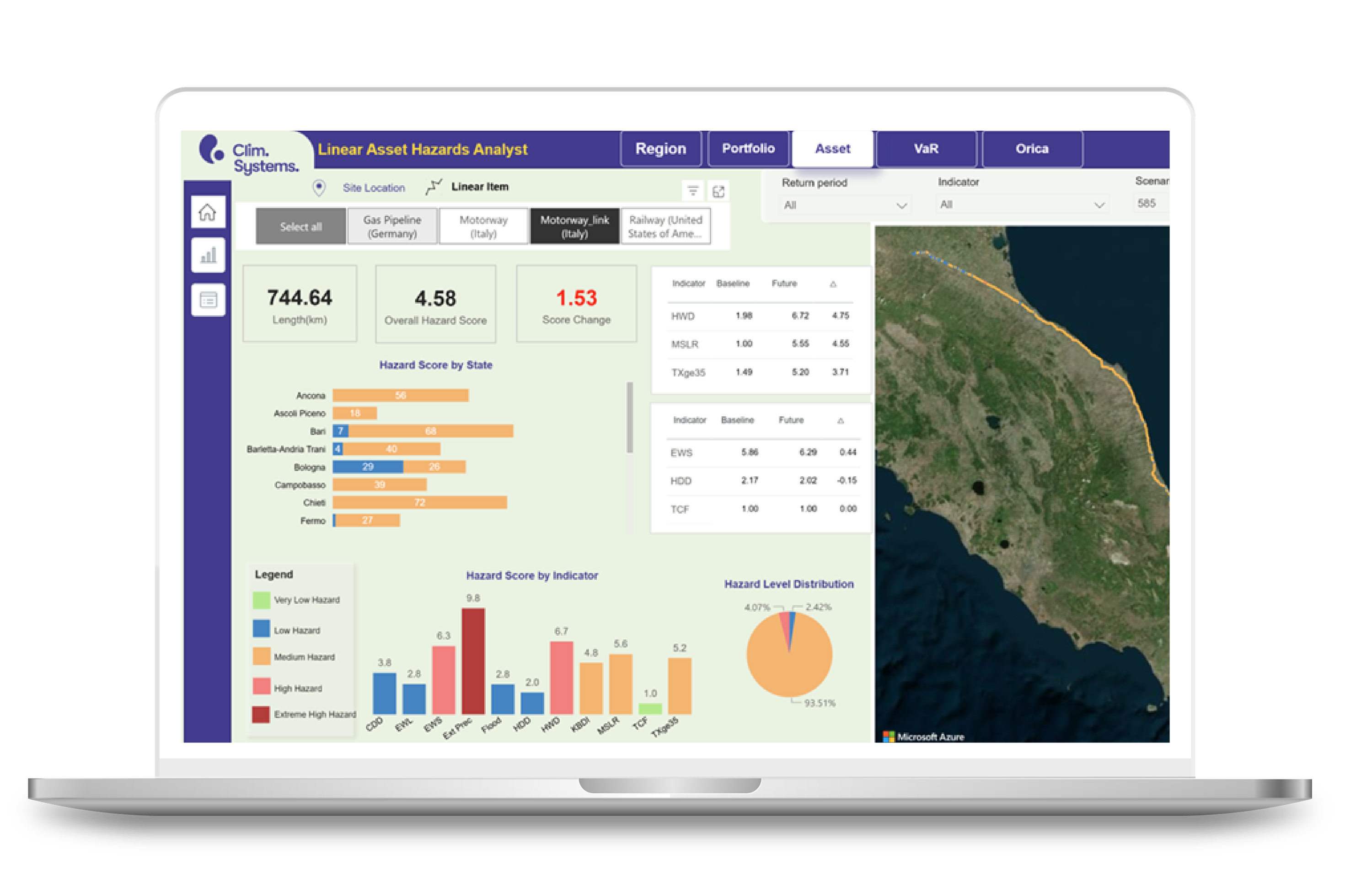
The SLR and ClimSystems team has developed a high-resolution approach to analysing hazards for linear assets. Our team assesses exposure in equal-distance segments along the asset’s entire trajectory by utilising market-leading GIS tools coupled with statistical concepts. This information is combined with climate baselines and climate change scenarios to determine risk scores at high granularity.
This detailed modelling of supply chain risks helps logistics teams identify high-risk areas along a product’s journey, enabling them to establish robust contingency plans, such as rerouting ahead of extreme weather events or adjusting harvest schedules to avoid peak heat windows.
Decision-makers across the industrial, consumer goods and manufacturing sectors need to understand climate risks at each mile of the supply chain. With our help, farming corporations, logistics companies, and major supermarket chains are ensuring they have a detailed understanding of climate risks and opportunities for all their key asset sites and transport routes, and a plan to address them.
Dr. Peter Urich, Founder, ClimSystems
Not all climate data is created equally. When selecting a data provider to map your risks, scientific rigour and usability should be amongst your top considerations, alongside high-quality, granular data. A provider whose data is validated by a dedicated team of climate scientists ensures that your climate risk assessment is actionable and holds up to audits. In addition, choosing a provider that can model the financial impacts from both physical damage and service disruptions can help you prioritise adaptation to enhance resilience and speed up recovery times.
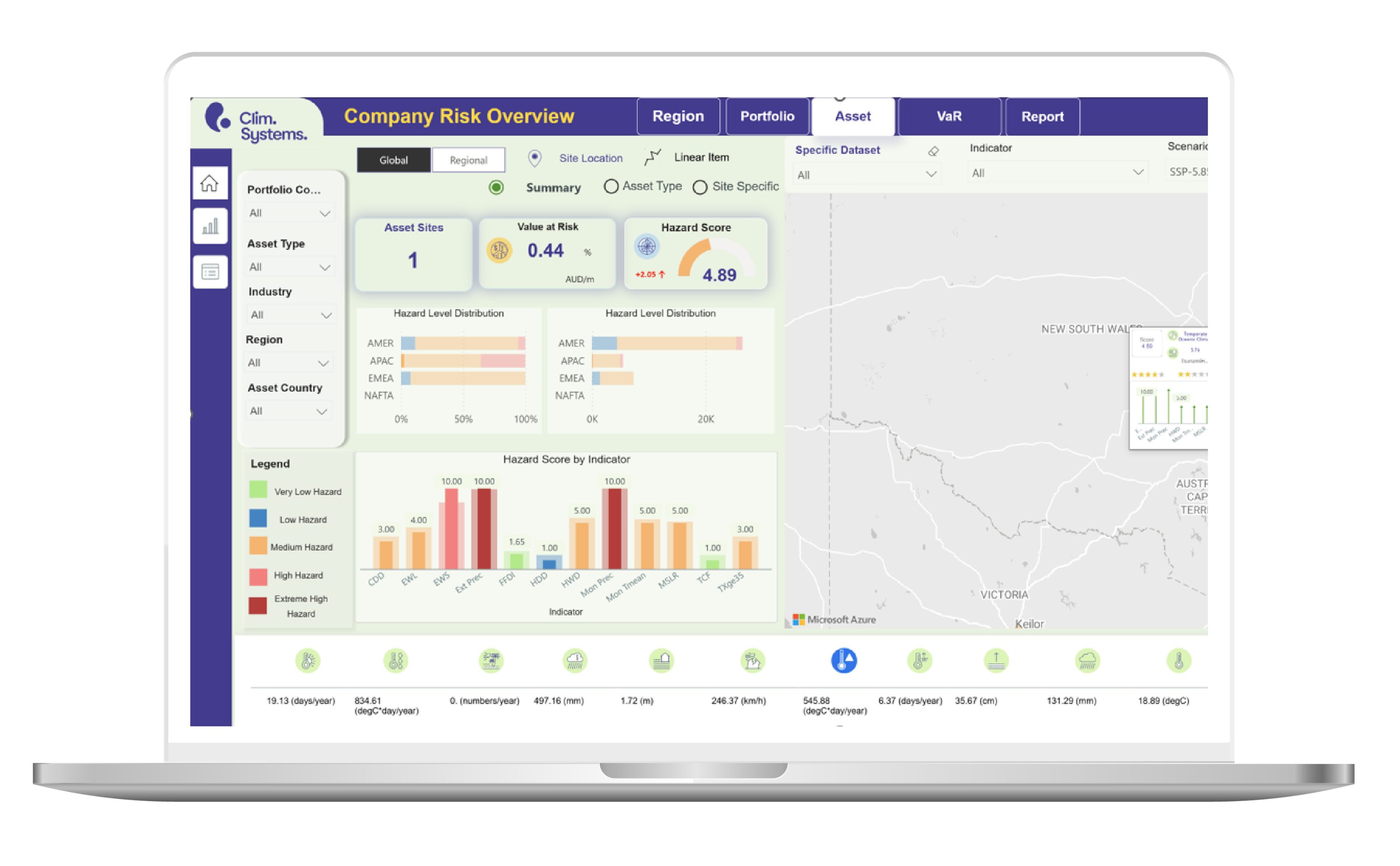
This approach has been used recently with multinational agricultural producers and supermarket chains to help them understand challenges and opportunities around supply chain risks.
Our work integrated live analysis and information into business decision making processes, enabling different parts of the business to regularly access and engage with climate data, informing both short- and long-term decisions.
We’re increasingly seeing interest in embedding our analytic tools and approaches into business decision-making. Our tailored dashboards and tools are allowing a much wider range of business functions to engage with and use climate data to futureproof their business.
Dr. Yinpeng Li, Chief Climate Scientist, SLR/ClimSystems.
Understanding climate risks at each mile of the supply chain not only ensures that shelves remain stocked but may also unlock new opportunities. Organisations across sectors need to understand how climate risks affect linear assets throughout the food supply chain as part of a robust business strategy.
Assessing climate risks at each stage of critical distribution routes helps anticipate disruptions, maintain continuity, and support informed decision-making, including adding innovation into processes and product portfolios. As experts passionate about deep science, we always see it as a win when our clients start thinking differently about their business.
They start translating risk insights into practical actions, whilst feeling supported throughout the process rather than relying on one-off assessments. Reach out if we can get you on the right track to screen linear assets on your critical distribution routes.
Visit ClimSystems to learn more about our detailed modelling of supply chain risks.
Enjoyed this article? For more like it, get SLR's quarterly sustainable business briefing straight to your inbox.
Sign up
by Jovontae Catline , Caroline Dolan, Joe Sarvary, Liz Whinnett

by James Balik-Meacher, Sophia Davison, Miguel Oyarbide

by Selina Roman-White, Valeria Alvarado Tejeda, Madison Edson, James Van Horne, Craig Bock, Matthew Mitchell