
ISO 14001:2026 and IED 2.0: From environmental compliance to strategic transformation
by Sebastian Katsch, Claire Bushell
View post
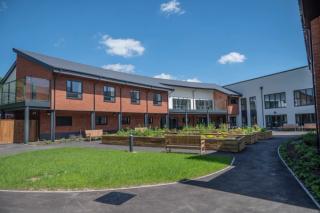
As the UK’s population continues to age, the conversation around retirement living is becoming more urgent and more complex. In 2022, the UK had around 12.7 million people aged 65 and over, and this is predicted to rise to 22.1 million by 2072. Yet despite growing demand, increasing investment and a steady pipeline of development, a fundamental question remains: are we truly designing places that enable care delivery matching individual needs or simply accommodation?
“Later living” has become a convenient umbrella term, covering everything from independent retirement apartments to high-dependency care homes. But in doing so it risks obscuring the real issue - that care, in all its forms, isn’t consistently embedded into the environments we are creating.
At a time when loneliness, isolation and mental health are rising concerns, and when the gap between social care provision and high-end retirement living continues to widen, the industry must ask itself whether it is delivering meaningful outcomes for residents or simply responding to market signals and seeking a return on investment?
Retirement living is attracting record levels of capital, driven by strong demographics, lack of historic investment into the sector to meet modern expectations, and a clear long-term demand story. But investment alone does not guarantee quality of life. Effort is needed to avoid treating care as an optional layer - something that can be added, adjusted or scaled depending on viability. What if, instead, we treated care as essential infrastructure? As fundamental as affordable housing options, transport, utilities or digital connectivity?
This shift in thinking challenges us to reconsider how and where we deliver later living. Large-scale, campus-style developments have become the norm, but they are not always suited to dense, land-constrained urban environments. Nor do they necessarily reflect how people want to live as they age. The opportunity lies in integrating care into the fabric of our towns and cities - creating places that are accessible, connected and responsive to changing needs over time.
Design plays a critical role in shaping the experience of later living but it also introduces tension. There is often a strong emphasis on creating attractive, “age-friendly” environments - places that feel aspirational, marketable and aligned with broader placemaking ambitions. Yet this can come into conflict with the operational realities of delivering care.
The needs of residents - particularly those with higher levels of acuity - are not always visible in architectural language or design review processes. Care or nursing requirements, staffing efficiencies and safeguarding considerations can be difficult to reconcile with subjective design expectations.
This raises an important question: when design aspiration and need-led operational necessities collide, who decides what matters most? Achieving the right balance requires close collaboration between designers, operators and end-users, and decision-makers. It also demands a clear understanding that good design is not just about how a place looks, but how it works - day in, day out, for the people who live and care there.
While our approach to designing for later living continues to evolve, planning policy has struggled to keep pace. This was echoed by The Older People’s Housing Taskforce Report released in 2024, that cited a halving of planning approvals for older people's housing between 2015 and 2023. National and local frameworks often fail to fully recognise the realities of ageing - both physical and cognitive - and the implications this has for housing, infrastructure and service provision. As a result, later living developments can face prolonged debates around need, viability and typology.These delays to decision-making ultimately delay the provision of care to those that need it now.
Recent policy developments and reports (including this article in Building Design & Construction from Amy Paterson, senior associate director at Aspire LPP) have begun to acknowledge these challenges but questions remain around whether this will translate into meaningful change on the ground. If we are serious about addressing the needs of an ageing population, there is a case for a more proactive approach - one that provides clarity, reduces uncertainty and supports delivery.
Underlying all of this is a broader issue: the way we conceptualise later living itself. Why do so many retirement schemes remain age-segregated, rather than integrated into multi-generational communities? How do we address the underserved “middle market” that sits between state provision and premium products? Why don’t we design and operate so that family care-givers are happily accommodated alongside their loved ones?
These are not just design or investment questions - they are societal ones. They challenge us to think differently about ageing, independence and the role of community in supporting wellbeing. They also point to the need for clearer definitions and standards around what we mean by “care”, and how it should be delivered within the built environment.
Implementing these new models, however, requires a volume of development that the current market is nowhere near achieving. Rising demand for senior housing presents a major risk if supply is not drastically increased. While 50,000 units are needed annually to meet demand, only about 7,000-8,000 are currently delivered per year. Rapidly accelerating this development pace is essential to bridge the supply gap.
It was great to continue the conversation at UKREiiF 2026 around how retirement living must evolve - moving beyond an investment-led model to one where care is fully embedded in delivery.
At SLR, we were proud to be part of this important discussion in Leeds, bringing together industry voices to explore how care can become a defining principle of retirement living, not an afterthought.
Our panel highlighted the need for a more integrated approach - one that puts people, wellbeing and long-term outcomes at the heart of development. They included:
Thank you to everyone who joined us at Pavilion 5 and contributed to such a valuable exchange of ideas. We’re looking forward to building on this momentum and continuing to shape genuinely care-led places.
Watch the highlights below to hear the key insights and perspectives from the panel.
by Sebastian Katsch, Claire Bushell

by Simon Hodgson, Daniel Witte, Blake Zheng

by Ashley Gibson