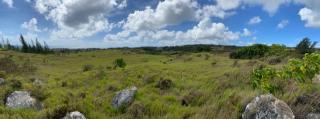
Barbados Onshore Wind Project
- Client Name
- International Finance Corporation - World Bank Group
- Location
- Barbados, North America
Challenge
The Government of Barbados is pursuing an ambitious target of achieving 100% renewable energy by 2030. As part of this transition, Barbados is seeking to develop its first utility-scale onshore wind farm—the 30–50 MW Lamberts and Castle Wind Project—through a Public-Private Partnership, with the aim of powering 12,000-17,000 homes.
As the first project of its kind in Barbados and the largest onshore wind project in the Caribbean, and the government’s commitment to achieve internationally accepted standards for design, construction and operations, the initiative required leading global environmental and social advisory to achieve both the local regulatory and international performance expectations. Establishing reliable baseline environmental and social data, developing frameworks to manage E&S risk, and supporting a competitive and bankable tender process were critical to the project’s success.
Solution
In partnership with 3E, SLR was selected by the International Finance Corporation (IFC) as the environmental and social consultant for the project. Working closely with the Government of Barbados – Ministry of Energy and Business – and the IFC’s Public Private Partnership Transaction Advisory team, SLR operated as One Team, bringing together international experts from Canada and the UK alongside regional specialists from Barbados and Trinidad & Tobago.
SLR’s mandate focused on “de-risking” the project by undertaking focused environmental and social studies and investigations to support bankable risk allocation and inform prospective developers about key risks that will need to be mitigated.
SLR’s work is being delivered in three phases:
- Phase 1: Environmental and social scoping, including identification of key risks, potential impacts, and mitigation measures
- Phase 2: Indicative design support, including environmental and social constraints analysis
- Phase 3: Ongoing support throughout the tendering process
Phase 1 studies included biodiversity assessments including field survey (birds, bats, reptiles, turtles), critical habitat assessment, development of a biodiversity offset strategy, development of land use, stakeholder engagement and community investment frameworks, stakeholder mapping, and capacity building with government and other key stakeholders. SLR also prepared comparative regulatory reviews aligned with IFC Performance Standards (2012), developed ESIA terms of reference, and produced a detailed E&S scoping report and bid obligations register to support the request for proposals.
Impact
SLR’s work established a comprehensive environmental and social baseline for Barbados’ first utility-scale onshore wind project, with the goal of streamlining the ESIA and permitting processes and enabling a more efficient and competitive tender process.
By aligning local regulatory requirements with international standards, the project is positioned to attract qualified private sector developers and secure financing from international lenders. Ongoing tender support—including the review of responses to the request for qualifications and proposals from shortlisted bidders—will ensure the successful delivery of this landmark project, contributing to Barbados’ renewable energy transition and setting a precedent for future world-class utility-scale renewable developments in the Caribbean.
Learn more about the project:
IFC and Government of Barbados Developing Wind Farm Inclusively with Community Involvement
