UKREiiF 2026: New places, old towns: Have we learnt anything?
- Post Date
- 08 April 2026
- Read Time
- 5 minutes
As the UK once again turns its attention to delivering new towns at pace, the question we should be asking is not simply how many homes we can build, but whether we have truly learned anything from the generations that came before us.
History shows that this is far from the first time we have faced such pressure. Waves of new settlement – driven by industrial expansion, post-war recovery and social reform – have consistently reshaped our towns and cities and created new places. From the model settlements of Bournville, Port Sunlight and New Lanark, to the pioneering vision of Letchworth Garden City and Welwyn Garden City, there has long been a recognition that place is more than buildings. It is a system – social, cultural, environmental and economic – working in concert.
And yet, despite these examples, we continue to risk repeating familiar patterns. Too often, place-making is reduced to metrics: housing numbers, viability gaps and delivery targets. Important as these are, they do not create the kind of places people aspire to live in, nor the kind that endure.
Why landscape-led masterplanning is the answer
At SLR, we believe the answer lies in a different approach – one that is not new, but perhaps has been underappreciated: landscape-led masterplanning.
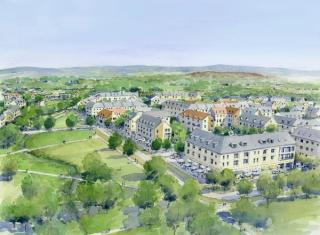
This is not landscape as a backdrop or a layer of green amenity added at the end of the process. It is landscape as the organising principle. A way of understanding place as an interconnected system – where geology, topography, ecology, infrastructure and human activity are intrinsically linked.
It is, in our view, the difference between designing in isolation and designing in context.
If we look back, the most successful places – whether early planned settlements or industrial villages – shared a common ambition: to improve the lives of those who lived and worked there. They were designed not only to house people, but to attract them. To offer health, opportunity, community and a sense of belonging. That ambition was rooted in a clear understanding of land, resources and human need.
Today, we have the benefit of far greater knowledge, technology and insight. We also face more complex challenges: climate change, biodiversity loss, social inequality and the urgent need to deliver homes at scale. The question is whether our approach matches the scale of that challenge.
The 20th century, in many ways, saw us drift out of step with the natural systems that sustain us. The 21st century must be defined by a rebalancing – designing places that work in cooperation with nature, not in opposition to it. This is not just an environmental imperative; it is fundamental to creating resilient, healthy and commercially viable places.
Landscape-led placemaking offers a framework for achieving this. By starting with landscape, we start with what is already there – the constraints, the opportunities and the inherent character of a place (urban or rural). This enables us to create places that are distinctive, rather than generic; resilient, rather than fragile; and integrated, rather than fragmented.
Crucially, this approach is not at odds with commercial reality. In fact, the market is increasingly recognising the value of quality, sustainability and long-term viability. Distinctive places command a premium. Well-designed environments attract investment. And integrated, landscape-led development reduces risk over time by aligning with natural systems and future-proofing against environmental change.
Aligning development, planning and community vision
The perceived tension between commercial viability and holistic design is, in many cases, overstated. The real challenge lies in alignment – bringing together developers, planners, designers and communities around a shared vision that balances short-term delivery with long-term value.
This is where the industry must be more ambitious.
Because if we look honestly at the legacy of many of our more recent developments, it is hard to argue that we have consistently delivered places of enduring quality. Too often, the focus has been on speed and volume, rather than character and resilience. Yet the ambition we once saw – from the industrialists who built settlements to support their workforce, to the reformers who envisioned healthier, more equitable living conditions – remains just as relevant today.
The opportunity now is to bring that ambition into the 21st century.
Not by replicating the past, but by learning from it.
By recognising that place is a system. That landscape is not something to be worked around, but something to be worked with. And that the most successful places are those that evolve in harmony with their environment, rather than in spite of it.
UKREiiF 2026: Driving the conversation on placemaking
As we look ahead to the next wave of new towns and the regeneration of our existing places, we should be asking ourselves a simple but profound question: where is our ambition?
At SLR, we will be exploring this question in depth at UKREiiF 2026 in Leeds – a key moment for the industry to come together and shape the future of our places.
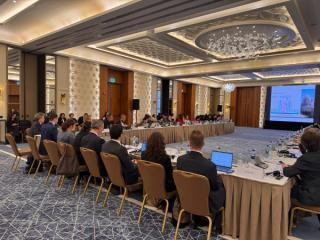
I will be taking part in a panel discussion alongside leading industry voices, where we will examine how landscape-led placemaking can deliver healthier, more distinctive and commercially viable places.
We look forward to continuing the conversation on Tuesday 19 May from 10am, at Pavillion 5, and invite you to join us as we explore how we can move from concept to delivery.
Find out more about SLR at UKREiiF