Improving the ecological health of the Waihī Estuary
- Client Name
- Te Wahapū o Waihī and Bay of Plenty Regional Council
- Location
- Pukehina, Bay of Plenty, New Zealand
Challenge
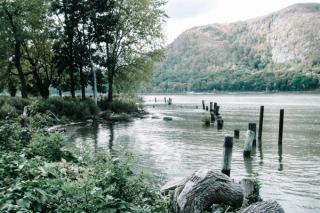
Iwi collective Te Wahapū o Waihī (TWOW) partnered with the Bay of Plenty Regional Council to restore 30ha of low-lying farmland into a reconstructed wetland and saltmarsh, improving the ecological health of the Waihī Estuary. TWOW consists of five iwi, all connected to the estuary – Ngāti Whakahemo, Ngāti Whakaue ki Maketu, Ngāti Mākino, Ngāti Pikiao, and Tapuika.
This significant, collaborative mātauranga Māori-led project is driven by the shared aspiration to restore the mauri of the Waihī Estuary, bringing together iwi, council, community, landowners, and the Waihī District Drainage Society. Many voices have helped shape this project and contributed to its design and success. The new wetland between the Pongakawa and Pukehina Canals, on the margins of the Waihī estuary, will play a critical role in treating agricultural drainage water from the adjacent dairy farms before it enters the estuary.
The main project challenges facing the client were ensuring the work was mātauranga Māori-led, with the diverse network of highly invested stakeholders remaining connected and heard during the concept development phase, alongside a complex hydrological scheme within the land to be returned to wetland. The client’s goals were for the Te Wahapū o Waihī and the Bay of Plenty Regional Council and their stakeholders, which included providing a high level of treatment to address nutrient pollution from drainage water, address biodiversity loss, improve carbon sequestration, and enhance the habitat biodiversity of the area – all within budget and to resource consent requirements.
Solution
SLR was selected for this project due to the team’s expertise, including an Ecologist with specialist experience in treatment wetlands and a Planner experienced in securing resource consents for complex environmental projects.
Our commitment to the project was two-fold: to provide a project manager to work closely with Te Wahapū o Waihī and the Bay of Plenty Regional Council, and to guide the project from concept design through to detailed design (including providing planning services to obtain the required resource consents).
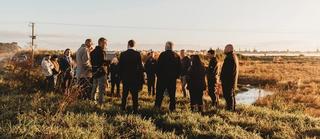
The project involved a co-design process led by iwi and involving all community stakeholders. Our project manager worked closely with Te Wahapū o Waihī and the Bay of Plenty Regional Council to support the project operations team. SLR, with the active support of the iwi, facilitated engagement hui with the kaitiaki groups, landowners and the Waihī Drainage Society, and understood their role was to listen and uphold the shared vision.
The hydrology challenge posed by the low-lying land required a major design shift partway through the project. The professionals engaged during the design process were a key part of the project’s success. Without their willingness to be part of an iterative, feedback process, with a mātauranga Māori lens provided by the iwi collective alongside Western science, we would not have achieved a design that supported the project's vision. Our project manager hosted multidisciplinary hui with diverse professionals, which sparked, discussed, and sense-checked ideas in short periods of time. This approach meant we could move forward at pace. These professionals included Coastal Scientists, Stormwater and Civil Engineers, Landscape Architects, NIWA (now Earth Sciences New Zealand) Scientists, mātauranga Māori Restoration Scientists, Regional Council Scientists and equipment experts. Our Planner worked with the project manager to obtain the required inputs and formulate a comprehensive consent application. They then navigated complex consenting hui to successfully achieve a resource consent.
Impact
Along with improved water quality and increasing indigenous ecological biodiversity through habitat creation, the wetland will contribute to climate change resilience, protecting the neighbouring properties. Further to this, the new wetland promotes cultural, scientific, and environmental innovation with research opportunities on kaitiakitanga (active guardianship), such as tohu surveys or traditional environmental indicator monitoring, native planting, archaeological information, and critical climate drivers, such as carbon storage or blue carbon. It will also serve as a blueprint for restoring low-lying coastal areas around Aotearoa New Zealand.
The project has been celebrated at national, regional, and local levels as an example of tackling water quality issues in dairying catchments with iwi leadership and community engagement. Three Government Ministers have visited the site on three different occasions to highlight the integrated partnership model, reinforcing how national-level support, local authority, and mātauranga Māori pragmatic knowledge and leadership can unite to restore environmental health and cultural wellbeing.
“I know this project means a lot to you, and you have done an amazing job for us over the last seven months or so. We have really enjoyed working with you and benefited from your professional and efficient approach to managing what is a pretty complex project. I am happy to be a referee for you on future projects.”
Pim de Monchy, Bay of Plenty Regional Council Coastal Catchments Manager
“I have really valued your dedication to our project and the technical skills you brought to the table. I hope we get a chance to work on another project together in the near future.”
Roana Bennett, Te Wahapū o Waihī Project Co-ordinator, and Kaiwhakahaere for Te Rūnanga o Ngāti Whakaue ki Maketu
Image credit: Anna Menendez Photography