
Energy storage: Unlocking the full potential of renewable energy
- Post Date
- 15 January 2026
- Read Time
- 9 minutes
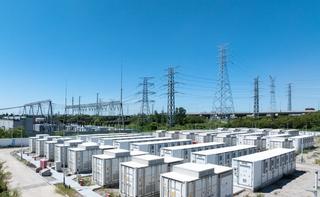
As the energy transition gains pace and the UK progresses towards net zero, a new challenge emerges: how do we ensure the UK’s electricity grid system remains stable, resilient, and ready to deliver clean energy? In the third article of our ‘Powering up for net zero’ series, Hannah Heck explores how energy storage can meet this challenge and help deliver clean power when and where it’s needed most.
About the 'Powering up for net zero' series
The transmission and distribution sector plays a crucial role in the journey to achieve net zero. Our Powering up for net zero article series explores how innovative technologies and solutions – such as smart grid technologies, distributed energy generation, energy storage, and energy parks – can work in tandem with the major grid infrastructure reinforcements underway to meet growing energy demands. See the other articles in this series so far:
The transition to renewables has accelerated rapidly in the UK, with offshore wind, solar, and hydropower now a growing share of our energy mix. However, this progress exposes the fundamental truth that generation alone doesn’t guarantee reliability. When the wind doesn’t blow or the sun doesn’t shine, the grid must still deliver power to homes, hospitals, and industries.
This is where energy storage comes in. Battery Energy Storage Systems (BESS) and long-duration storage technologies are an important link in a truly decarbonised energy system. They transform intermittent renewable generation into a dependable, 24/7 energy resource, bridging the gap between variable supply and constant demand. By capturing excess energy and releasing it during peak hours, storage systems can reduce curtailment, cut carbon emissions, and lower system costs, helping the UK make better use of its clean energy resources.
The intermittency challenge
Renewable energy sources such as wind, solar, and hydropower are crucial for decarbonisation, but they are inherently variable. The electricity grid must constantly balance supply and demand, yet weather-dependent generation can fluctuate dramatically from one hour to the next. When this delicate equilibrium fails, grid instability, voltage fluctuations, and even widespread blackouts can occur.
Historically, this balancing act was managed by large fossil fuel power stations, which could ramp output up or down as needed. But as these plants are phased out, the grid is becoming more exposed to the variability of renewable generation. The UK grid has already faced such pressures, and similar incidents across Europe highlight the importance of both energy storage and flexible generation. The blackout across Spain and Portugal in April 2025, which left approximately 60 million people without power, was triggered by a sudden loss of 15 gigawatts of electricity within seconds, which cascaded across the interconnected network and disrupted supply on an unprecedented scale. [1] Without sufficient storage or demand-side flexibility, renewable power can’t always be harnessed effectively, and the system must still fall back on fossil fuels to fill the gap.
Wasted wind: Why energy storage matters
Despite the UK’s investment in offshore wind, a lack of grid flexibility means wind farms are often paid to stop generating clean energy – a process known as curtailment. This happens when the transmission network cannot export or store excess electricity, especially from wind-rich regions in Scotland to high-demand centres in the south of England. Instead of being used, clean energy is effectively wasted, while fossil fuelled generation is ramped up to balance the grid.
In 2024 alone, the UK incurred over £394 million in direct constraint payments to wind farm operators.[2] These payments, made by the National Energy System Operator (NESO), compensate operators for lost revenue but ultimately increase costs for consumers through higher energy bills. Each megawatt of curtailed wind power represents lost progress toward net zero and unnecessary emissions from fossil fuel substitutes.
By capturing surplus renewable generation and releasing it when demand peaks, BESS can reduce curtailment, cut carbon emissions, and lower system costs. In doing so, they help the UK make better use of its clean energy resources and contribute to a more efficient, resilient, and affordable electricity system.
Storing energy for when it’s needed most
Energy storage technologies bridge the gap between renewable generation and real-time demand. BESS are among the most versatile solutions – they store electricity during periods of low demand and discharge it back to the grid when demand peaks. This stabilises supply, supports frequency control, and reduces reliance on carbon-intensive peaking plants.
Modern BESS installations demonstrate how storage can operate as flexible grid infrastructure, capable of responding within milliseconds to fluctuations in supply or demand. They not only store power, but also deliver essential grid services such as frequency regulation, reactive power support, and reserve capacity, helping maintain a stable 50 Hz system frequency.
Batteries are a highly versatile form of storage, but large-scale solutions such as Pumped Hydro Storage (PHS) also contribute significantly to the system. PHS stores energy by moving water between two reservoirs at different elevations, releasing it through turbines to generate electricity when demand rises. The Dinorwig Power Station in Wales, one of the largest of its kind in Europe, can produce 1,728 MW within seconds – enough to power more than 3,000,000 homes for short periods.[3] By complementing BESS, PHS provides rapid-response, large-scale capacity that enhances grid stability and supports emergency backup, helping to balance variable renewable generation across the system.
PHS is capable of delivering large-scale, rapid-response energy, and BESS offers flexible deployment at a range of scales. Together, these technologies smooth out the peaks and troughs of generation and demand, strengthen grid resilience, and help make better use of renewable energy.
Building a more resilient and restoration-ready grid
Modern storage systems are redefining how we think about grid reliability and recovery. The UK’s Electricity System Restoration Standard (ESRS), introduced by the Department for Energy Security and Net Zero (DESNZ), sets new national targets for restoring power following a partial or total grid shutdown. Traditionally, this ‘black start’ capability – the ability to restart the grid without external power – was limited to large fossil fuel plants. Today, grid-forming BESS systems can perform the same function, delivering fast, decentralised energy to nearby substations and distribution zones.
To meet ESRS requirements, Ofgem has updated key codes such as Grid Code GC0156 and Distribution Code DCRP/MP/22/02, embedding resilience planning into new energy infrastructure. Generators and storage providers must now be able to operate independently for up to 72 hours and restore 60% of regional demand within 24 hours, with full national restoration targeted within five days.[4] These updates ensure that resilience is no longer an afterthought, but a fundamental component of energy system design.
Most current BESS installations are ‘grid-following,’ meaning they depend on external power sources to synchronise and operate. However, next-generation grid-forming systems can control voltage and frequency independently, enabling autonomous black start capability and improving grid stability.
Looking ahead
Government policy is accelerating this shift, particularly through initiatives such as the forthcoming Long Duration Electricity Storage (LDES) investment support scheme. This scheme is designed to de-risk investment in storage technologies by providing a ‘cap and floor’ revenue mechanism, which stabilises returns for developers and encourages private sector participation. By offering financial certainty, the scheme aims to unlock investment in technologies capable of storing energy for hours or even days, supporting grid flexibility, reducing reliance on fossil-fuel peaking plants, and helping the UK make more effective use of its renewable generation. Complementary policies, such as updated grid codes and the European Sustainability Reporting Standards (ESRS), also incentivise the deployment of storage that can provide rapid-response, black start, and other essential grid services, embedding resilience into the electricity system from the outset.
Innovation in storage is also extending beyond grid-scale systems. Companies such as Allye Energy and SYNETIQ are collaborating with Jaguar Land Rover (JLR) to repurpose end-of-life EV batteries into modular MAX BESS units. Each unit can store around 270 kWh, enough to power an average UK home for nearly a month and offers a sustainable alternative to diesel generators at off-grid or temporary sites.[5] As energy storage becomes a defining feature of the UK’s transition to net zero, environmental consultancies play a vital role in ensuring that these projects are designed, permitted, and delivered responsibly.
In the face of increasing climate challenges, designing infrastructure that is both resilient and restoration-ready is no longer optional, it is essential. Battery and hydro storage are key enablers of a net zero future, providing the flexibility and reliability needed to integrate variable renewables, balance supply and demand, and support energy security. As the UK transitions to a low-carbon economy, continued collaboration between developers, regulators, and environmental consultants will be key to building a future that is both sustainable and secure.
SLR supports clients in navigating the complex regulatory and technical landscape surrounding energy storage, from site selection, EIA, and planning, through to grid integration and resilience planning. Our teams combine engineering, environmental, and planning expertise to help unlock the potential of renewable infrastructure while minimising environmental impacts and maximising operational efficiency.
Contact us————————————————————-
References
- https://www.euronews.com/my-europe/2025/10/03/obsolete-electricity-grid-triggered-blackout-in-portugal-and-spain-experts-reveal
- https://www.ref.org.uk/ref-blog/384-discarded-wind-energy-increases-by-91-in-2024
- https://www.engie.co.uk/dinorwig-power-station-en/
- https://www.ofgem.gov.uk/sites/default/files/2024-02/GC0156%20Authority%20Decision.pdf
- https://www.jlr.com/news/2024/04/jlr-powers-zero-emissions-charging-go-first-battery-energy-storage-system-using-second
Recent posts
-
-
Unlocking value through solar PV repowering: A focus on module replacement and DC/AC optimisation
by David Fernandez
View post -